Just a geek who lives in Olympia, WA with my wife, son, and animals. In my free time I play board games, write fiction, and make stuff.
600 stories
·
4 followers

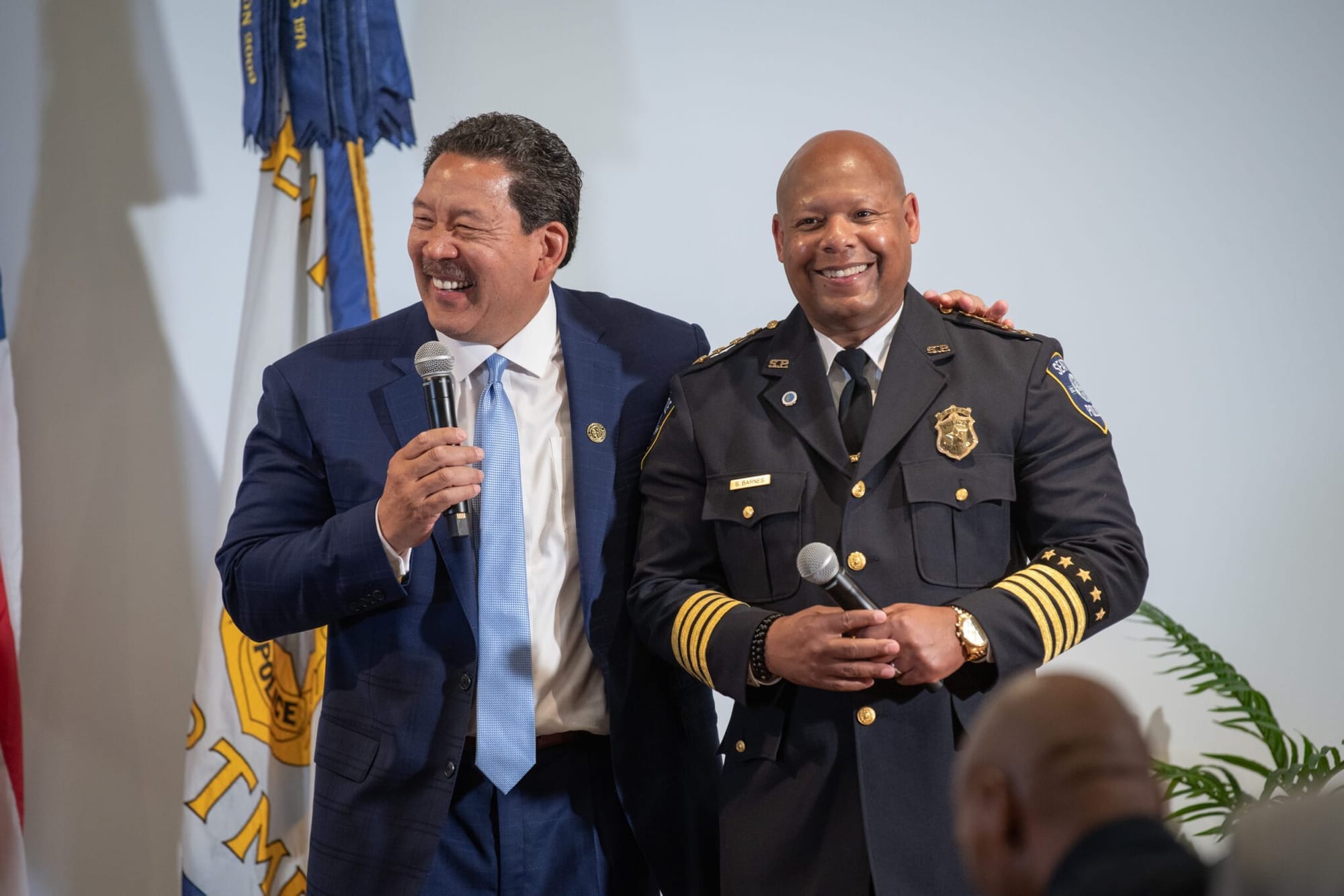
Op-Ed: Chief Shon Barnes Wasn’t a Martyr; He Was the Status Quo

2 Shares
Op-Ed: Chief Shon Barnes Wasn’t a Martyr; He Was the Status Quo

When the news broke of the Bite of Seattle shooting, I was standing in the parking lot of the Beacon Hill Red Apple in shock and horror as I thought of all the families whom I saw enjoying their lives two hours earlier. I was heartbroken to imagine how all of that was shattered. Later, I was saddened further to learn that the shooter was a 15-year-old child and that a 19-year-old kid’s life was shattered; the latter will not go home. 

Two others, aged 44 and 56, also would not go home to their families and numerous others were injured and traumatized. The youngest among them was a two-year-old baby. 

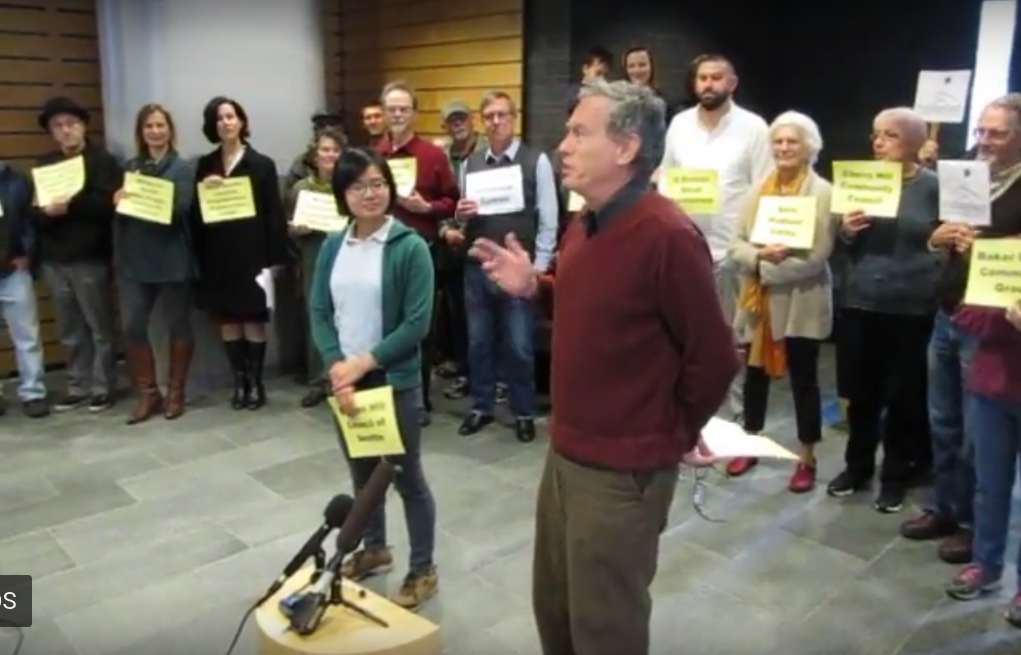
In a video shared on Instagram, author and South Seattle Emerald publisher Marcus Harrison Green posed a moral challenge to this narrative: “What are we doing people?” On Thursday, when rumors were swirling that Police Chief Shon Barnes had been fired, Black civic and religious leaders held a press conference to denounce Mayor Wilson’s decision, and instead of feeling pride, I felt disgust, as I confided in several friends and fellow activists.

I felt disgust on multiple levels: 1) I was wondering why we weren’t focusing on the victims or what we need to heal the community; 2) listening as a Black man who is deeply concerned about advancing police accountability, seeing some people I respect seemingly run political cover for a police officer who has committed himself to a homophobic, transphobic, reactionary, and sexist status quo. 

Harrison Green’s eloquent outrage at our current discourse’s focus on blame and not being about healing was brilliant, and I’m not going to retread that territory. My point is that the Seattle Times and other media outlets that are framing this cover for a status quo cop as representative of the needs of the Black community have it wrong. 

During the press conference and seemingly righteous display of local Black political power that was done in the rest of the Black community’s name, several of the leaders expressed solidarity with outgoing Chief Barnes because “he had shown up.” As prominent figures in nonprofit, corporate, and religious spaces, they expressed the ability to access his office and feel heard. 

They cited the local impact of the national decline in crime and violence and framed Barnes as a change agent and reform leader. The decrease in crime nationally, including in Seattle, is due to several factors that are not quite clear to experts. NPR’s reporting this July, which heavily featured Seattle, noted that while crime has decreased, violence remains an issue, quoting Gary Ernsdorff, the supervisor of the Special Operations Unit in the King County Prosecutor's Office: “[King County] still has gang violence. We're still having drive-by shootings. We're still having armed robberies." 

Likewise, local sources cite the unevenness of the progress made in each neighborhood. Nonetheless, the Black Lives Matter movement and Racial Justice advocates didn’t march and organize because crime was out of control in our communities. We organized and marched because the Seattle Police Department (SPD) has been notorious for racist, discriminatory, and violent behavior and a culture that is antithetical to our values of social justice. 

During Chief Barnes’ tenure, the Office of Police Accountability received 60 complaints about his travel schedule, unprofessional behavior. Recently, two more complaints were opened after a testy exchange with a South Seattle Emerald reporter, according to King 5. Likewise, Publicola has documented the lack of progress on SPD’s goal of having a 30% female recruit class by 2030 that the agency had only managed to hire five women, a decrease from previous years, as well as ongoing homophobia and discrimination lawsuits. 

Within Barnes administration, officers were hostile to the Black Lives Matter movement – a movement led by an intergenerational coalition of Black activists and religious leaders that I participated in, and which even included many who were at Thursday’s press conference. As Erica C. Barnett notes, “[Chief] Barnes also passed over a gay lieutenant [for promotion] who was a fixture in the Capitol Hill community and had been serving as acting captain of the East Precinct, Doug Raguso, in favor of an infamous officer named Mike Tietjen."

Tietjen’s name was synonymous with his misconduct during the 2020 Black Lives Matter protests in the neighborhood, when he drove his SUV onto a sidewalk full of protesters, likening them to “cockroaches” as they ran out of his path. Tietjen was also disciplined for an incident that same year, in which he was among a group of officers who harassed a trans woman, asking if she “had a dick under” her skirt.”

In addition to Barnes’ record of discriminatory behavior, Barnes was a part of SPD’s infamous undermining of the CARE team and its ability to execute its mission to provide civilianized behavioral crisis intervention, as an alternative to always dispatching an armed officer. This is one of the major demands of police reformers locally and the Black Lives Matter movement nationally. 
Op-Ed: Chief Shon Barnes Wasn’t a Martyr; He Was the Status Quo
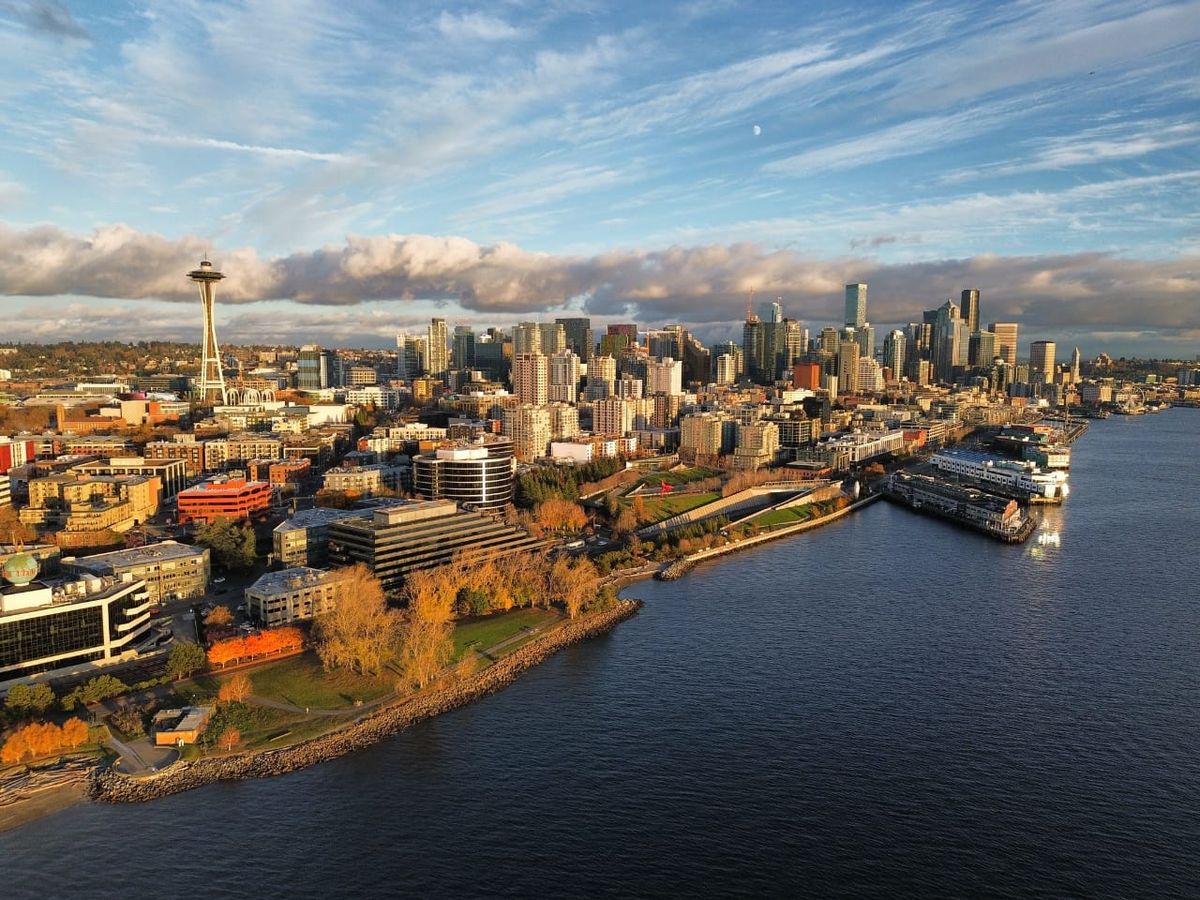
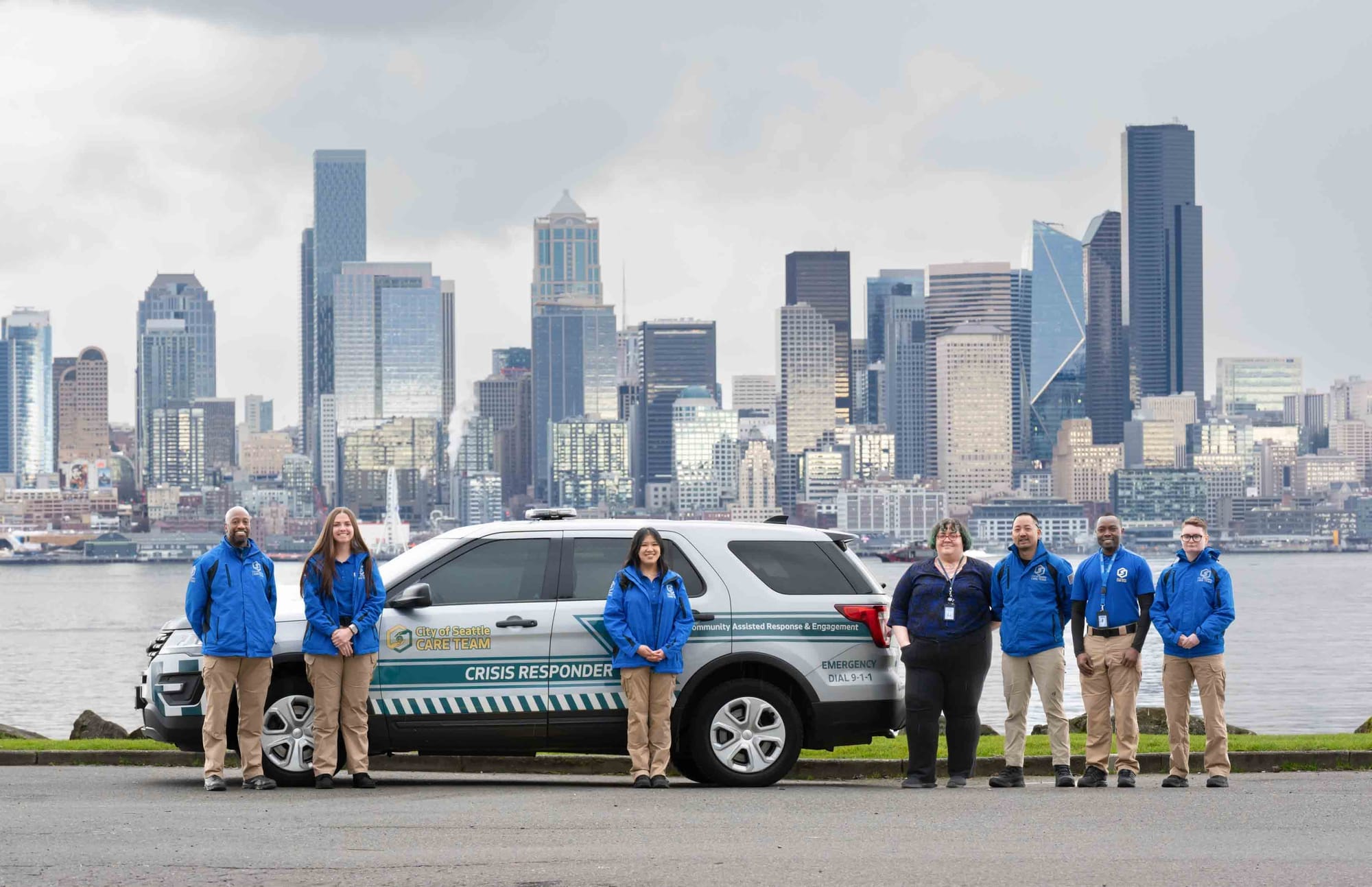
The Community Assisted Response & Engagement (CARE) crisis response team poses with a department SUV in West Seattle, with the downtown skyline visible across Elliott Bay. While the team recently doubled in size, the police labor contract greatly limits the calls they can take. (City of Seattle)

So what’s going on? What are we doing here? To say it plain: this ain’t it. This is either a well-meaning but shortsighted protest or disturbingly cynical and toxic re-litigation of the 2025 election that is sidelining the political conversation that we need to have about real change with SPD!  

Seattle’s Black community is a small portion of the overall population and it's very diverse, made up of a number of different diasporas of transplants and immigrants, as noted by Harrison Green in his piece during the 2025 election. The accusation and insinuation that Mayor Wilson’s is anti-Black or tone deaf to the Black community go back to an unsuccessful reelection strategy by Bruce Harrell. Many of those at the press conference were openly Bruce Harrell supporters and/or individual donors

Due to gentrification, our small community has many faces and is more spread out than ever.  Seattle’s Black community is fundamentally different than it was in the 1990s or the 2000s. My point is not to disregard and disrespect many of leaders who were present and who have done meaningful work and who have been a pillar of the community long before now; the point is that the idea that defending a police chief who didn’t live here full time and didn’t advance any of the programs, demands or cultural change that many of us have been advocating for isn’t healthy for our community as a whole. 

Seattle has a nasty history of having a Black face in a White space of power and considering that enough to move the needle. This trend is true in many American cities. We need to do better.
Op-Ed: Chief Shon Barnes Wasn’t a Martyr; He Was the Status Quo
CARE department chief Amy Barden was among the leaders touting Mayor Bruce Harrell’s 2026 budget, which includes a 0.1% sales tax hike for a handful of public safety investments. (Amy Sundberg)

The next Chief has to be comfortable with the uncomfortable reality that we will not trust them because of a history of discrimination and pain; and be comfortable embracing a truly community driven public safety policy that doesn’t prioritize surveillance but, instead prioritizes healing, prevention, and de-escalation. Moreover, they need to be brave enough to break with the Seattle Police Officers Guild (SPOG), one of the biggest obstacles to progress on public safety in the city. 

SPOG appeared to be the driving force behind Chief Barnes slow walking of CARE department expansion, which included him refusing to even meet one on one with CARE Chief Amy Barden for more than a year. The next police chief must do better and be a true partner, rather than a major obstacle to civilian response that virtually all Seattle leaders are united in at least saying they support.

The next police chief must realize that concrete systemic change at SPD is necessary. That must mean change which lifts all of our voices, not just a select few within or in proximity to power. The thing we are missing is not symbolic victories; it’s tangible, structural change to deliver better outcomes for Seattleites, especially the Black communities that are used to be forgotten or treated as pawns.


Clifford Cawthon is a community activist, public employee, and podcast host of "The Unmasked Agenda" on Rainier Avenue Radio. Cliff has called Seattle and King County home for 12 years and in that time he has worked with local labor and progressive organizations to campaign to raise the minimum wage, renew the Seattle Housing Levy, expand mass transit, and pass the Covenant Homeownership Program. He was previously the Housing Chair for the Seattle-King County NAACP and on the Board of Black Lives Matter Seattle-King County, and currently sits on the board of the MLK Working Families Party, advises the Rainier Beach Action Coalition, and is a Democratic Socialist of America member.


Wilson Ousts Police Chief Amid Criticisms of Missteps, Frequent Absences
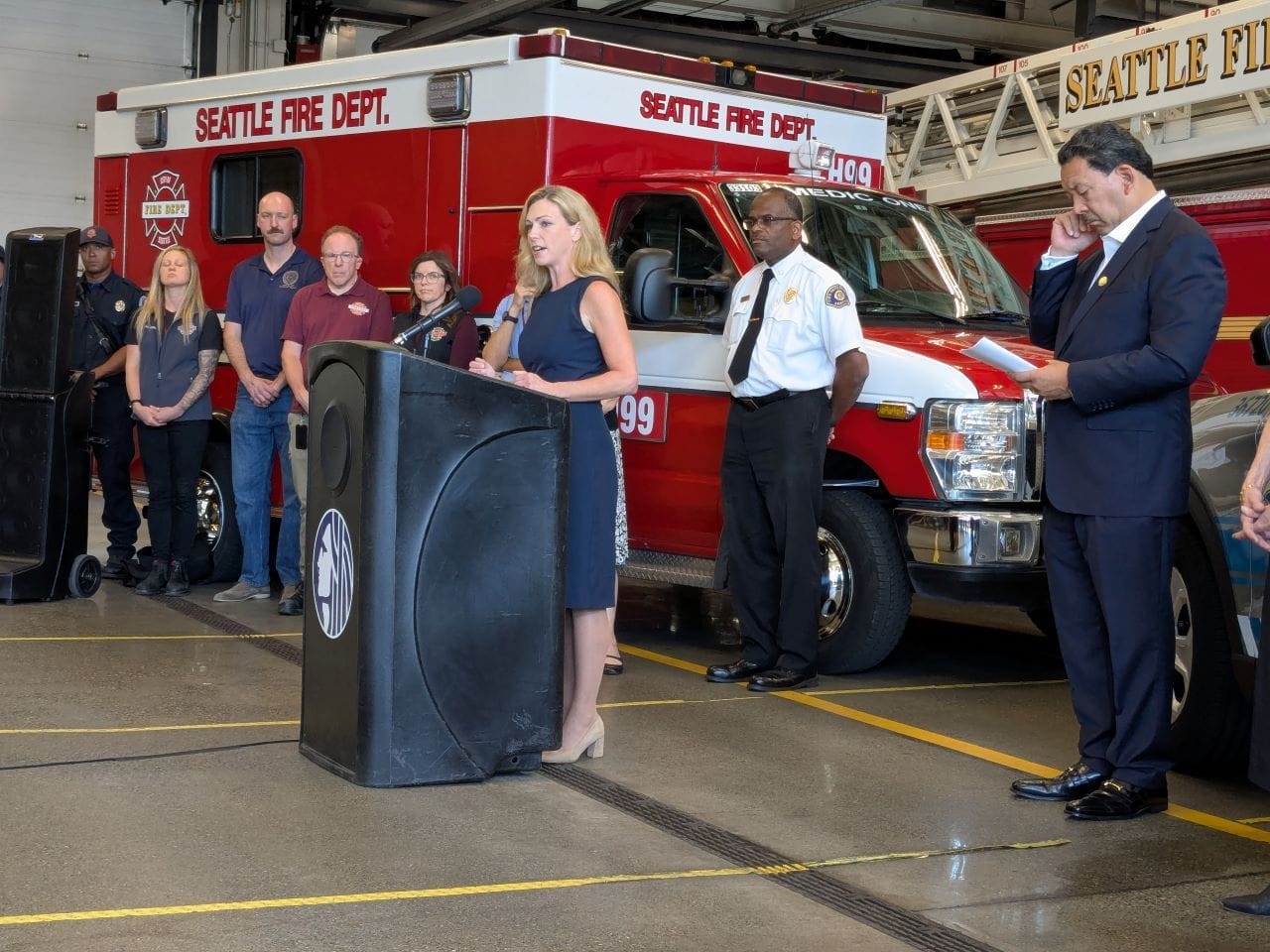
Mayor Katie Wilson ousted Seattle Police Chief Shon Barnes on Wednesday, according to numerous reports, but allies are fighting to save his job. Barnes’ missteps and frequent absences have worn thin his welcome in the Wilson administration.
Seattle Civilian Responder Team Chafes Under Police Guild Contract Restrictions
Seattle’s Community Assisted Response & Engagement (CARE) department is expanding, but it’s being blocked from doing its job by the conditions laid out in the new Seattle Police Officers Guild contract. CARE is looking to circumvent these obstacles.
Read the whole story
Share this story
Delete

Freedom, Washington

1 Share

Washington spent thirty-six years as a territory before Congress finally granted statehood in 1889. This in-between space lasted longer than almost any other territory in the country, and that wasn’t an accident.

Robert Ficken makes the case in Washington Territory: for most of those thirty-six years, the place didn’t function as one territory at all. The Cascades split it into two economies, two identities that barely spoke to each other.

Western Washington ran on San Francisco capital and San Francisco trade.

Eastern Washington answered to Portland, making it effectively an arm of eastern Oregon. It moved its wheat through Portland, took whatever price Portland offered.

What the territory lacked wasn’t ambition. It was a spine, some internal run of track solid enough to bind two halves that had never had much reason to look at each other. Only when railroads finally punched through the mountains and bridged the Columbia in the mid-1880s, threading one economy into the other for the first time, did the territory start acting like a single place.

Before statehood, Washington was not free. Territorial residents had almost no say in their own government. The delegate they sent to Congress couldn’t vote, and they still paid federal taxes and lived under federal law anyway, the exact arrangement that had fueled a revolution a century before. Even their governor and judges came from Washington, D.C., appointed as political rewards to men who’d rarely set foot in the West, who knew little about the place they’d been sent to run. They often left the moment something better came along.

For decades, the only real route between eastern Washington and the coast ran down the Columbia River, and Portland controlled it. It set the rates. It picked the terminals. The Oregon Railway and Navigation Company charged whatever it wanted to move wheat and goods out of the Inland Empire, and that turned eastern Washington into less of a neighbor and more of a captive market. If you grew wheat near Walla Walla or Spokane, Portland decided what you’d earn for it.

Frustrated by a decade of asking and getting nowhere, Washington’s non-voting congressional delegate asked Congress in 1877 for an “enabling act,” permission for the territory to write its own state constitution. Congress didn’t answer. So Washingtonians stopped waiting for permission. They elected delegates and sent them to Walla Walla in June of 1878, where the group spent forty days writing a constitution of their own, official blessing or not.

The choice of Walla Walla wasn’t random. It was the biggest city in the territory at the time, built on the wheat boom rolling across the Palouse, and picking it was a deliberate answer to the very split Ficken writes about, a way of telling eastern Washington it mattered just as much as the coast did. The delegates cared enough about healing that divide that they even invited northern Idaho to send a delegate, hoping to fold the Panhandle into the new state. Northern Idaho had more in common with Walla Walla and Spokane than with Boise. Its wheat and timber flowed toward the same captive Columbia River corridor as everyone else’s in eastern Washington.

You can almost imagine different state lines that would have produced states earlier. If western Washington had split and eastern Washington and northern Idaho joined, these states might have made it into the union faster.

What the delegates at Walla Walla proposed makes sense once you remember the timing. This was before the Northern Pacific had finished its transcontinental line, while the Portland monopoly still had its foot on eastern Washington’s neck, while outside corporate power was still, plain and simple, the enemy. The 1878 constitution came out swinging. It capped freight rates, blocked corporations from meddling in local politics, and went after the Columbia River monopolists’ grip on local farmers piece by piece.

Voters loved it. In November of 1878, they approved the constitution by better than two to one, 6,537 in favor against 3,236 opposed. Then they sent it off to Washington, D.C., and Congress just ignored it. Nobody in D.C. wanted to admit a territory that heavily Republican, especially not one trying to rewrite corporate law and redraw the borders of two other territories in the same document. The bill died quietly. The 1878 constitution never became law. It just sat there for eleven years, a preview of an argument Washington would have to have all over again.

What finally broke Portland and San Francisco’s grip was a bigger outside power. Congress had chartered the Northern Pacific Railroad back in 1864, but its headquarters was in New York, and its money came from Wall Street, first from Jay Cooke, later from Henry Villard and J.P. Morgan. When the NP finally built its line west, it wasn’t doing Washington Territory any favors. It was chasing profit, and Congress had handed it a massive incentive to do so, alternating sections of public land stretching forty miles deep on either side of the tracks, millions of acres of Washington timber and farmland, all of it controlled from New York. Because the NP owned the land and picked the route, it could make or break entire towns. Instead of routing its saltwater terminus through an established city like Olympia or Seattle, the railroad built its own town from scratch at New Tacoma, simply because it already owned every lot there.

By the time seventy-five delegates gathered in Olympia on July 4, 1889, they’d already watched the Northern Pacific spend a few years transforming the territory, laying track, pulling in settlers, building the very economic case that finally convinced Congress statehood made sense. The irony was hard to miss. The delegates weren’t grateful. They were nervous. They’d just watched one outside monopoly get smashed by an even bigger one, and now that bigger one owned a huge share of the state they were about to create.

That nervousness is the whole reason Article XII of the Washington Constitution, titled “Corporations Other Than Municipal,” turned into one of the most heavily fought sections in the entire document. It reads less like ordinary legal boilerplate and more like a list of grievances.

Section 1 barred the legislature from ever again handing a company like the Northern Pacific a custom charter loaded with special privileges, the way corrupt territorial legislatures once had, and it kept the legislature’s right to amend or revoke any charter whenever it wanted. Section 7 went after the “foreign corporation” problem directly, meaning any company headquartered outside Washington, and made it illegal for one of those companies to get better treatment in the state than a homegrown competitor. Sections 13 through 22 read like eastern Washington’s wheat farmers dictated them personally. Railroads became “public highways” under the new constitution, and railroad companies became “common carriers,” language that put them under strict state regulation. Discriminatory freight rates got banned outright, so a railroad couldn’t quietly charge a small farmer more per mile than a big shipper, or punish a town that had crossed it. Pooling, the practice of supposedly competing lines secretly agreeing to fix prices instead of actually competing, got prohibited too.

None of it was as radical as it could have been. Corporate lobbyists worked the halls of the old wooden capitol all that summer, and some of the sharper teeth from the 1878 draft, personal liability for corporate directors chief among them, got filed down before the final vote. Washington still needed East Coast capital to keep building, and the framers knew it.

Line the two constitutions up next to each other and they tell a single story in two acts. The 1878 constitution was written by people with nothing left to lose, before the Northern Pacific had finished a single mile of track, while Portland was still the only monopoly in the room and outside corporate power was simply the enemy, full stop. Congress killed it without a second thought. The 1889 constitution was written by people who’d already made the deal. They’d already watched the Northern Pacific break Portland’s grip, already build the towns, already decide who got a station and who didn’t. Statehood only became possible because Washington accepted that bargain. Article XII wasn’t an attempt to refuse the deal. It was an attempt to survive it, a leash written into the state’s founding document for a monster the state had already let across the threshold.

That’s the same trick the country pulled a century earlier, played out on a smaller stage. Franklin didn’t go to Paris because he loved the French monarchy. He went because Britain wasn’t going anywhere without a bigger power tipping the scales, and France had its own reasons to want London humbled. The alliance worked, and it also became something the young United States spent years trying to wriggle back out of. Within a decade, Washington’s own Farewell Address was warning the country against permanent foreign entanglements, and by the end of the 1790s the alliance with France had curdled into an undeclared war at sea. The country used France to win its independence, then spent a generation making sure France couldn’t collect on the debt. Washington Territory ran the same play on a faster clock. It used the Northern Pacific to win its independence from Portland and Washington DC, then wrote Article XII that same year, not a decade later, to make sure the Northern Pacific couldn’t collect either.

Self-governance, in both cases, was never a clean break. It was a deal cut by whoever held the leverage to cut it, followed almost immediately by a second deal meant to limit the first. Washington’s framers understood that as well as anyone in Philadelphia or Paris ever did. They just wrote their version into Article XII instead of a treaty. That’s worth remembering every Fourth of July in Washington.

We mark our statehood that got bought and paid for, same as the revolution they’re meant to echo. Both times, the generation that cut the deal spent its very next act making sure that deal couldn’t turn around and own them.

Read the whole story
Share this story
Delete

Op-Ed: The Orca Whales Didn’t Hire Toby Thaler

1 Share

The biggest threat to whales is cars and the sea of pavement carrying them.

Op-Ed: The Orca Whales Didn’t Hire Toby Thaler

“This plan will literally pave over orca recovery efforts.” 

So said Jennifer Godfrey, Seattle Symphony bassist and founder of Orca Nexus, in a January press release opposing the Seattle Comprehensive Plan — the city’s 20-year housing growth framework, now fully adopted and in effect. Godfrey has spent the better part of a year in court trying to force the City back to the drawing board on its environmental review, arguing that new housing will remove trees, increase impervious surface, generate stormwater runoff, and ultimately harm the 74 remaining Southern Resident killer whales. 

She is not wrong that impervious surfaces are killing salmon and threatening orcas. She is wrong about which ones.

Op-Ed: The Orca Whales Didn’t Hire Toby Thaler
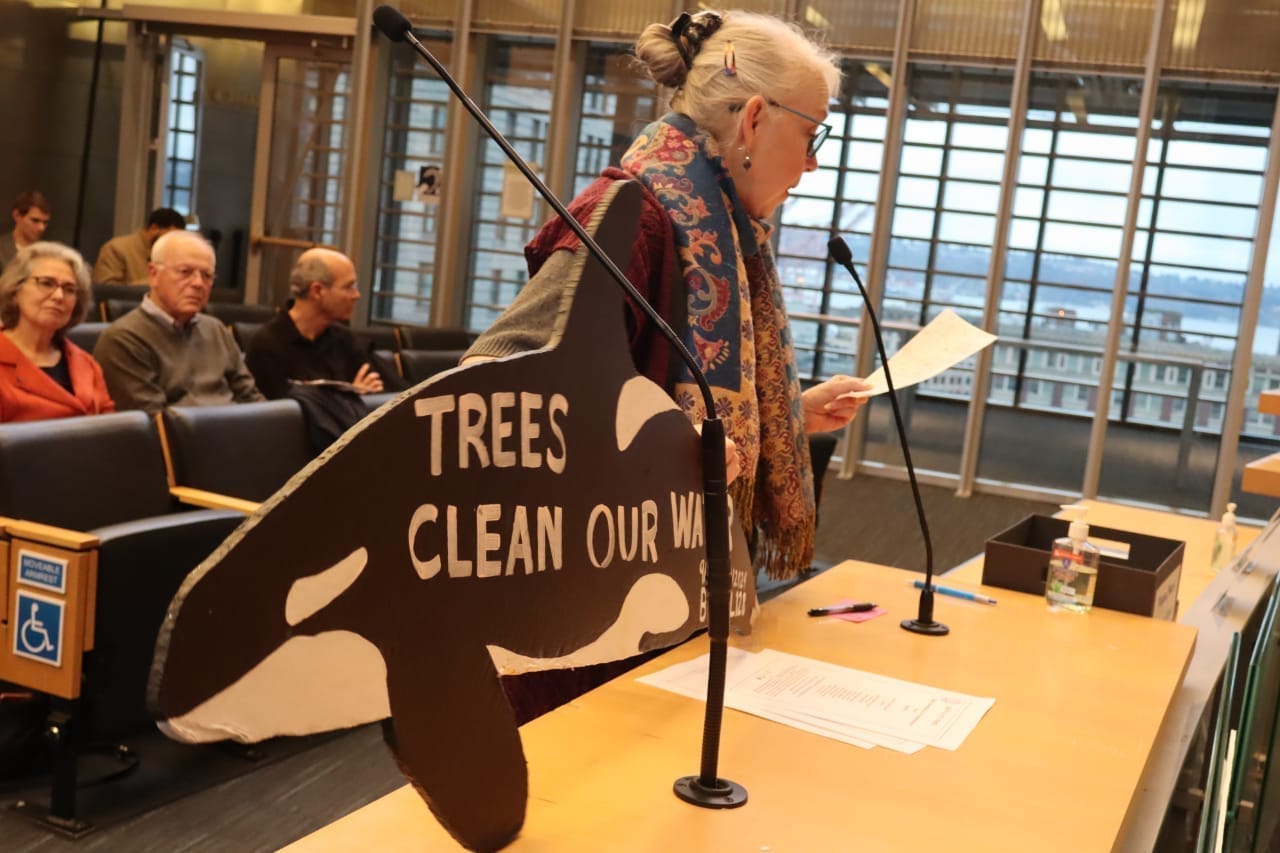
Jennifer Godfrey, seen here testifying at the Seattle City Council in 2025, has been leading an appeal seeking to block the Seattle Comprehensive Plan. (Seattle Channel)

If Godfrey and her coalition are genuinely concerned about runoff entering Seattle’s watersheds, there is a policy agenda available to them that does not require blocking 112,000 housing units. It would mandate permeable pavement for any surface parking lot undergoing resurfacing, require retrofit on lots above a certain acreage, and phase in replacement across the city’s hundreds of identified surface parking parcels — the ones generating tire and brake particulate runoff into the drainage system with every rain event, right now, today, before any new apartments can be built. Unlike existing roads and parking lots, new apartment buildings are required to provide stormwater retention on site.

A permeable pavement ordinance would measurably reduce the load of the toxic 6PPD-quinone compound entering Thornton Creek and Pipers Creek. Godfrey has not proposed it. The question worth asking, as the evidence accumulates, is why not. 

In 2021, researchers at the University of Washington and Washington State University published a study in Science that appeared to solve a 25-year mystery. Adult coho salmon had been dying in Seattle-area urban creeks every fall during their spawning runs — healthy fish, arriving at the stream mouth and dying before they could reproduce. The cause was stormwater. But which compound, exactly?

Op-Ed: The Orca Whales Didn’t Hire Toby Thaler
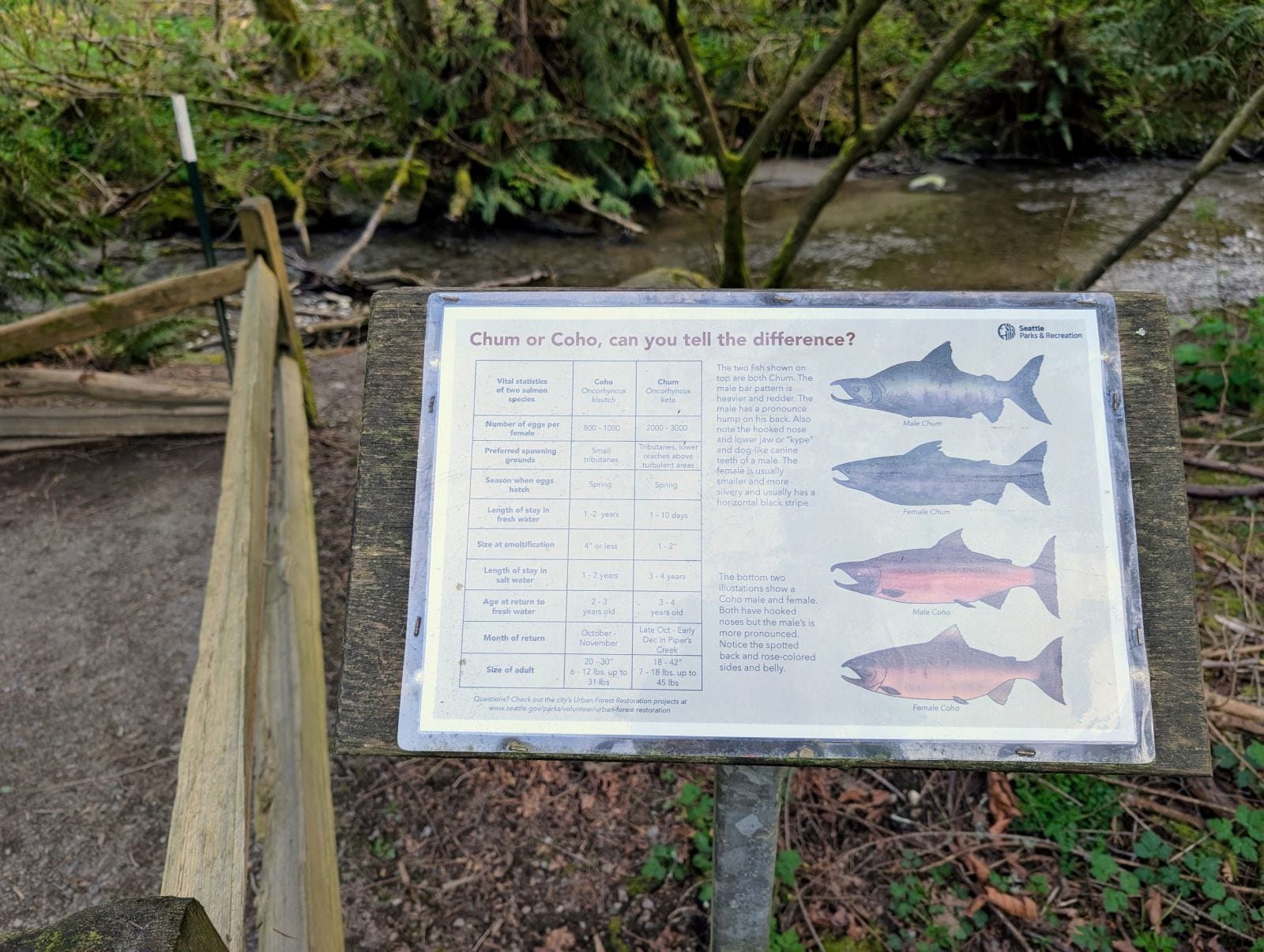
Pipers Creek at Carkeek Park is where scientists studied the toxic runoff that chum salmon survived while coho were decimated. The park includes a helpful sign to identify the difference between species. (Doug Trumm)

The answer was 6PPD-quinone, a transformation product of a chemical added to every car tire manufactured on Earth to prevent ozone damage. As tires wear against road surfaces, they shed particles continuously. Those particles — and the toxic compounds they carry — wash off roads and parking lots with every rainfall, enter the drainage system, and flow into urban streams. The median lethal concentration for coho is 0.8 micrograms per liter. Researchers measured concentrations of up to 19 micrograms per liter in Seattle-area urban runoff. This is not a marginal exceedance. 

This is in every creek in the Puget Sound region right now. Today. Every time it rains. 

Pipers Creek, which flows entirely within Carkeek Park before emptying directly into Puget Sound — no estuary buffer, no treatment lag — still hosts a salmon run. It is not merely geographically convenient to this argument. Federal scientists conducting daily surveys at Pipers Creek in 2008 documented an unusual fall overlap of returning coho and chum: every coho died before spawning, while nearly all the chum survived. That observation became one of the key lines of evidence that eventually led, 12 years later, to the identification of 6PPD-quinone as the cause.

Op-Ed: The Orca Whales Didn’t Hire Toby Thaler
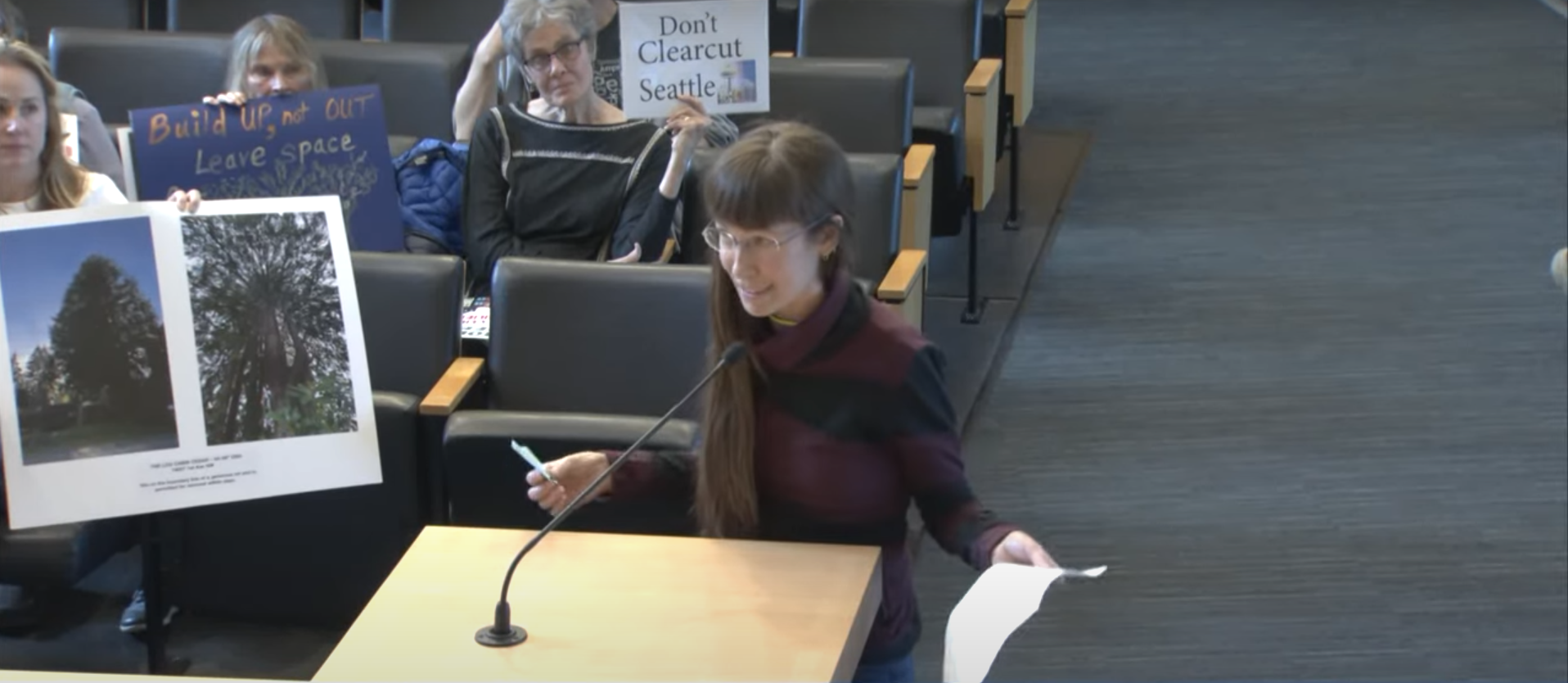
A commenter at a public hearing in 2025 speaks against the proposed One Seattle Comprehensive Plan by citing potential impacts on tree canopy, stormwater, and whales. (Ryan Packer)

The creek that Godfrey claims to be protecting from hypothetical future apartments was already an outdoor laboratory for the damage that existing roads and parking lots were doing — years before anyone knew the compound’s name. 

The One Seattle Plan did not put it there. Decades of car-centric land use did. 

Seattle’s street network comprises nearly 4,000 lane-miles of paved surface — roughly 5,750 acres of asphalt and concrete, by the Seattle Department of Transportation’s own inventory, not counting alleys or parking lots. The Mortgage Bankers Association, in its inventory of Seattle parking, counted 1.6 million individual spaces. At a standard planning estimate of 300 square feet per stall including access lanes, that is approximately 11,000 acres of impermeable parking surface alone — about one-fifth of Seattle’s total land area, devoted entirely to storing cars.

Weaponizing environmental concerns to prevent people from living in our urban environments isn’t new. It’s deployed by people with resources to restrict access to high opportunity areas. It’s nimbyism. In order to reach our housing goals, our land use processes must stop enabling this behavior.

[image or embed]

— Jess Bateman (@jessdbateman.bsky.social) May 28, 2026 at 7:08 AM

Together, roads and parking represent approximately 17,000 acres of impervious car infrastructure already in place, already shedding tire particles, brake dust, oil, and heavy metals into the drainage system with every rainfall. 

Globally, tires generate approximately 6 million metric tons of microplastic particles annually. American drivers, owing to higher vehicle miles traveled, generate 4.7 kilograms of tire wear per capita per year — roughly 20 times the rate in lower-car dependency countries. The Bay Area, comparable in scale to greater Seattle, generates an estimated 15,000 to 18,000 metric tons of tire wear particles annually from its road network alone.

Op-Ed: The Orca Whales Didn’t Hire Toby Thaler
Southern Resident orca whales eat primarily Chinook salmon, a highly specialized diet which makes them very at risk when runs fail. Seal-eating orcas are less vulnerable. (NOAA)

Owners of electric vehicles should note: tire emissions from EVs run approximately 20% higher than from internal combustion vehicles, because they are heavier and generate more torque. The Prius in the driveway is not a get-out-of-jail free card. 

Against this existing, operating, continuously generating pollution load, the appellants have placed a speculative projection of future tree canopy loss from future housing construction. The city’s own environmental review found that only 14% of Seattle’s recent canopy loss occurred on parcels that underwent development — the rest is attributable to climate stress, aging trees, and the general effects of a city that has not met its own canopy targets for decades. Godfrey disputes the methodology. Whatever numbers she claims to be concerned about are a tiny fraction of the existing impermeable surface.

Seattle looks clean. It largely is clean — as long as you are standing on a sidewalk. The prevailing westerlies push combustion byproducts east over the Cascades, and what stays behind washes into Puget Sound. Seattle’s performative environmentalist mindset takes credit for the clear skies, while the salmon and orcas get the runoff. 

Op-Ed: The Orca Whales Didn’t Hire Toby Thaler
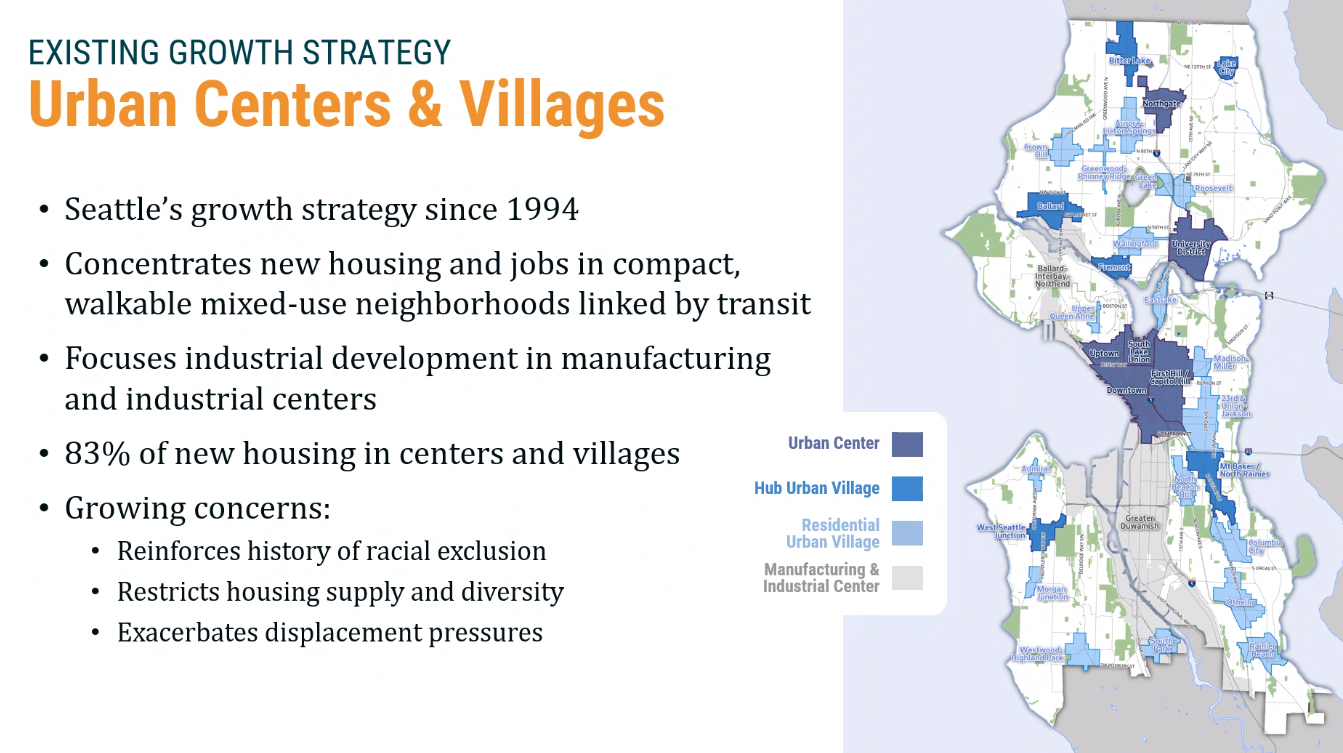
Since 1994, Seattle has followed a growth strategy that has funneled 83% of growth to Urban Centers and Villages, shown in blue, while directing growth away from single family zones. (OPCD)

The carbon load the westerlies are moving along is not trivial. According to the city’s own 2022 greenhouse gas emissions inventory, road transportation is Seattle’s single largest source of climate pollution, accounting for 58% of core citywide emissions — roughly 1.7 million metric tons of carbon dioxide equivalent per year. That number goes down as the city densifies: Seattle’s per-capita emissions are already approximately half the national average, a direct consequence of transit access and walkable land use. 

Every apartment building that replaces a surface parking lot reduces vehicle miles traveled, shortens the distance between residents and the conveniences they would otherwise drive to, and with it decreases the tire wear load, the brake dust, and the carbon inventory the westerlies are so efficiently redistributing on our behalf. Every year the appellants succeed in delaying that outcome, the existing pollution continues unchanged. Science advances one funeral at a time, as Max Planck observed; one hopes the orcas can wait. 

This is not an accident of geography that thoughtful policy might address. It is the operating condition that the appeal seeks to preserve — single-family land use patterns, high car dependency, and a parking-lot-to-apartment ratio that generates maximum road surface per resident and minimum transit use per capita.

Op-Ed: The Orca Whales Didn’t Hire Toby Thaler
Toby Thaler speaks to gathered media at November 27, 2017 announcement of MHA appeal. (SCALE)

Godfrey is represented by Toby Thaler, a familiar figure in these types of obstructionist legal appeals. In 2017, Thaler organized the Seattle Coalition for Affordability, Livability and Equity or SCALE — a group of 24 neighborhood associations — to appeal the Mandatory Housing Affordability rezones. The appeal failed at every level, costing the city an estimated $87 million in affordable housing contributions during the year it was pending. 

One of SCALE’s stated grounds for appeal was tree canopy. When Alex Pedersen won his District 4 Seattle City Council seat in 2019, running on homeowner backlash, he hired Thaler as his aide. Within weeks, Pedersen convened a special hearing on protecting Seattle’s trees.

Op-Ed: The Orca Whales Didn’t Hire Toby Thaler
Alex Pedersen stylized himself as a defender of trees while on Council. (Pedersen)

Pedersen left his seat after one term, though his successor Maritza Rivera has largely taken up the mantle for him. The trees argument has found new sponsorship. The orcas are new. The attorney is not. 

This is the operational definition of performative environmentalism: the deployment of ecological language, legitimate scientific concern, and charismatic species as legal instruments in service of an outcome — blocking density — that has nothing to do with watershed health and everything to do with preservation of human habitat in a way certain homeowners see fit. 

The words are correct. The citations are real. The Southern Resident orca whales are genuinely endangered. None of that changes the fact that the remedy sought is a new environmental impact statement, not a permeable pavement ordinance, nor a parking retrofit mandate, nor a petition against the 1.6 million impermeable stalls already draining into Seattle’s creeks every time it rains. The performance is convincing precisely because the threat is real and the science it borrows is sound. What it borrows the science for is something else entirely.

The organizations that signed Godfrey’s amicus brief — Birds Connect Seattle, the Thornton Creek Alliance, the Orca Conservancy, the Puget Sound Chapter of the American Cetacean Society, and the Oceanic Preservation Society — are welcome to demonstrate that this reading is uncharitable. The permeable pavement ordinance is available. So is a petition to reduce parking minimums, a filing against any of the 1.6 million impermeable stalls currently draining into Seattle’s watersheds, or a public comment in support of the transit infrastructure that would reduce vehicle miles traveled and the tire particulate load that comes with them.

Op-Ed: The Orca Whales Didn’t Hire Toby Thaler
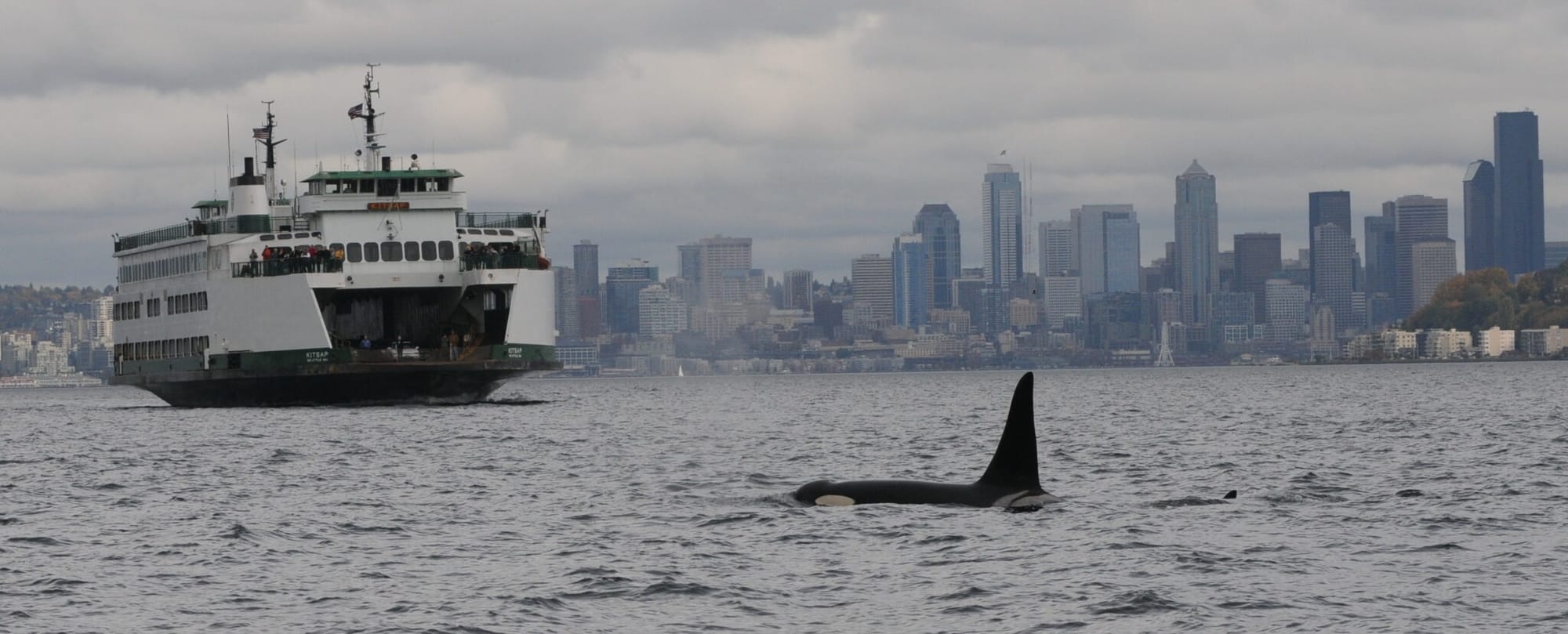
An orca whale in Elliott Bay next to a Washington State Ferry with the Seattle skyline in the background. (National Marine Fisheries Service)

The 6PPD-quinone literature is not obscure. It was produced at Washington state universities, published in Science, and has generated more than 400 follow-on studies worldwide. It names the compound. It names the source. It names the creek. 

Godfrey is welcome to co-sponsor that pavement ordinance. Her response will be informative. 

Paul Beard is the author of Why the Rent Is Too Damn High, published by Otherwise Book in 2026.

Lin Moves to Curb Legal Appeals Hindering Seattle Zoning Changes
A proposal from Land Use Committee Chair Eddie Lin would bring Seattle’s land use code in line with state law, following several changes in recent years that have limited the ability of legal appeals to slow down moves to densify Washington’s cities. The move is already attracting opposition.
Op-Ed: The Orca Whales Didn’t Hire Toby Thaler
Read the whole story
Share this story
Delete

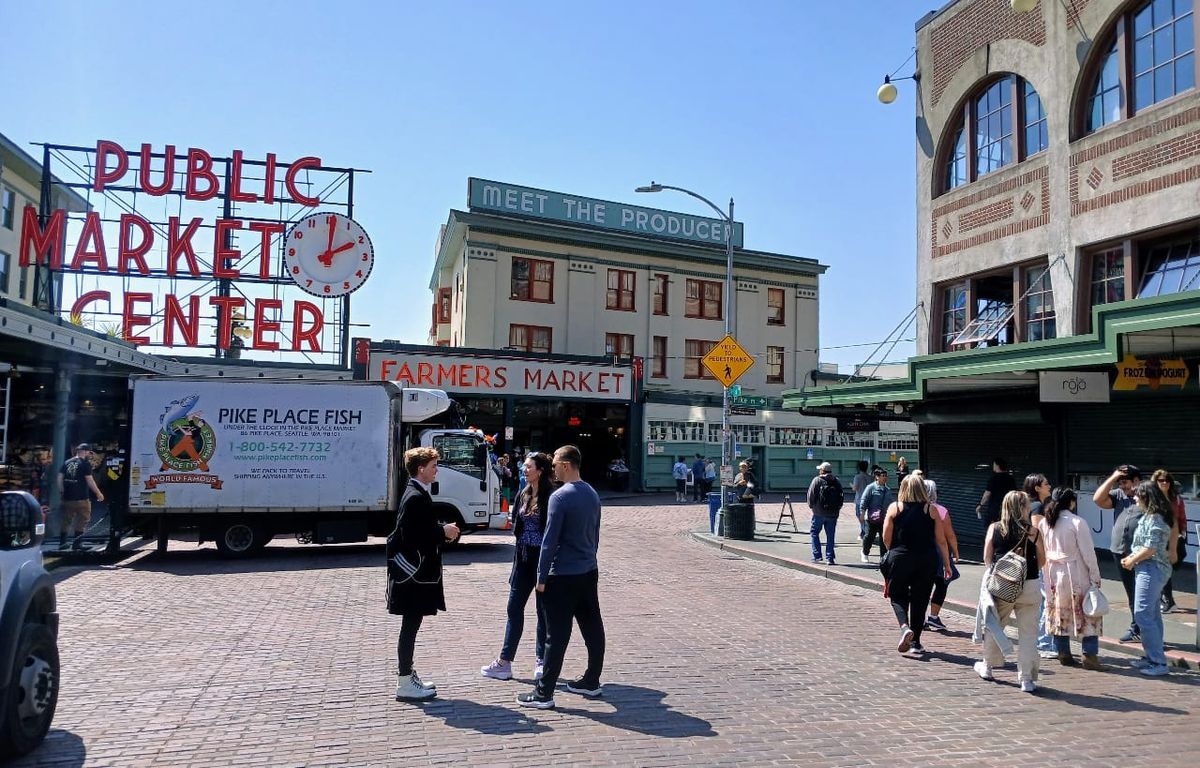
Pike Place Market Pedestrianization Pilot Boosts Sales and Visits

1 Share
Pike Place Market Pedestrianization Pilot Boosts Sales and Visits

Limiting car access to Pike Place to better welcome foot traffic has been a boon to Pike Place Market visitation and sales, according to newly released data. Commercial tenant sales rose 6.5% in 2025 compared to 2024, after the implementation of a "test and learn" pilot vehicle access strategy at Pike Place Market early last spring.

Sales at retail stores within the Market rose 9.2%, with restaurants seeing a 10.2% boost between May and September, the busiest season at Seattle's most popular public market. The number of visitors who live within 30 miles of the Market increased by 5.6% from one year to the next, a figure that translates to an additional 127,000 Puget Sound residents dropping by Pike Place at some point in 2025.

These new numbers, presented to the Pike Place Public Development Authority (PDA) Executive Committee last week, strongly bolster the case for considering permanent pedestrianization infrastructure at the Market. Under the pilot, vehicle access to Pike Place is restricted from 10am to 4pm everyday, with exceptions provided for drivers making deliveries, those needing ADA access, and emergency vehicles, with all drivers able to access the street earlier in the morning and in the evening.

Pike Place Market Pedestrianization Pilot Boosts Sales and Visits
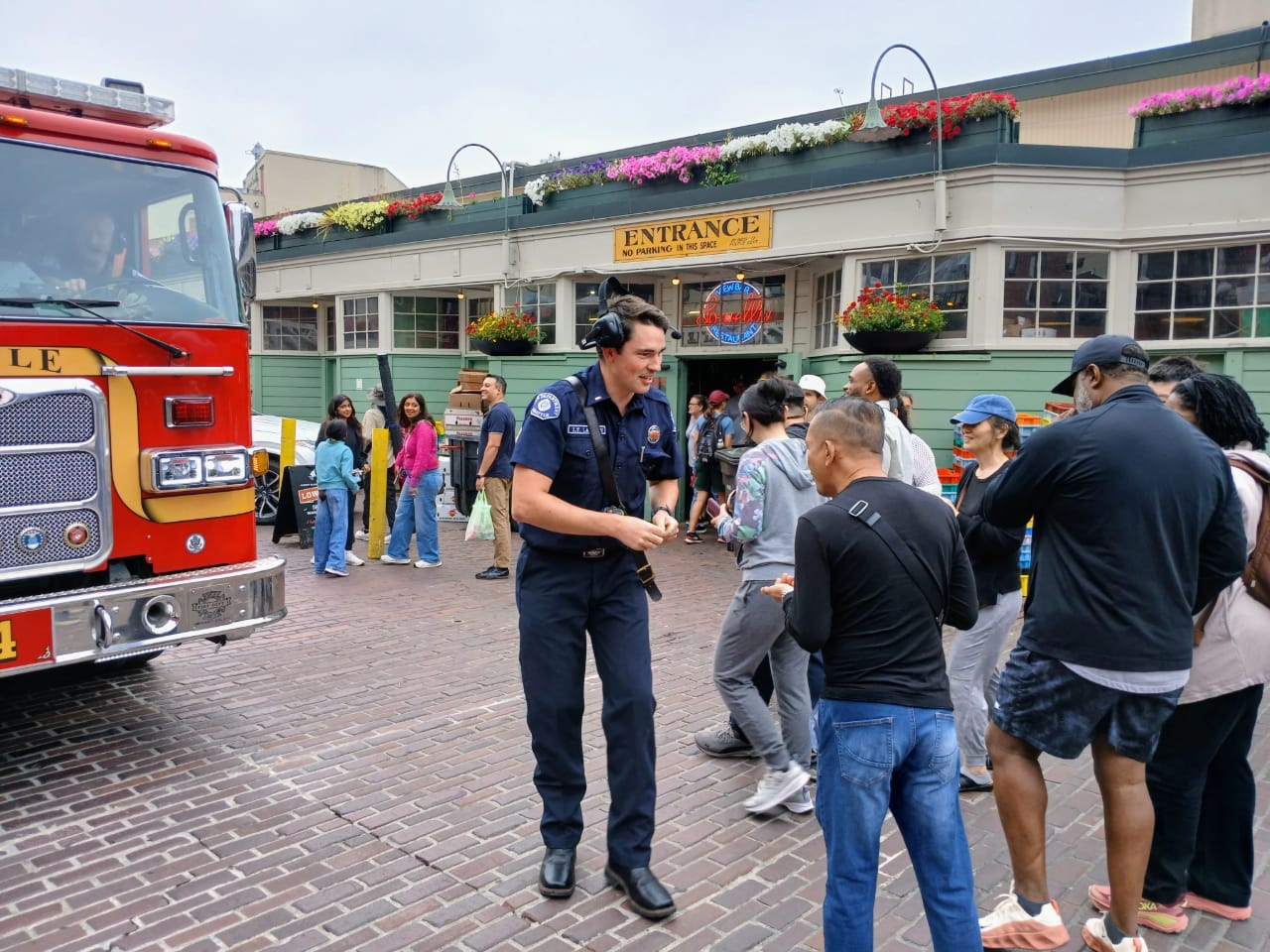
A Seattle Fire Department employee hands out stickers to Market visitors during the peak of the 2025 summer tourist season. (Ryan Packer)

Initially set to last a year, the pilot has been extended at least through Labor Day of 2026, as PDA leaders – tasked with managing day-to-day operations at the Market – work with city officials and other stakeholders to determine what the Market's new normal will be.

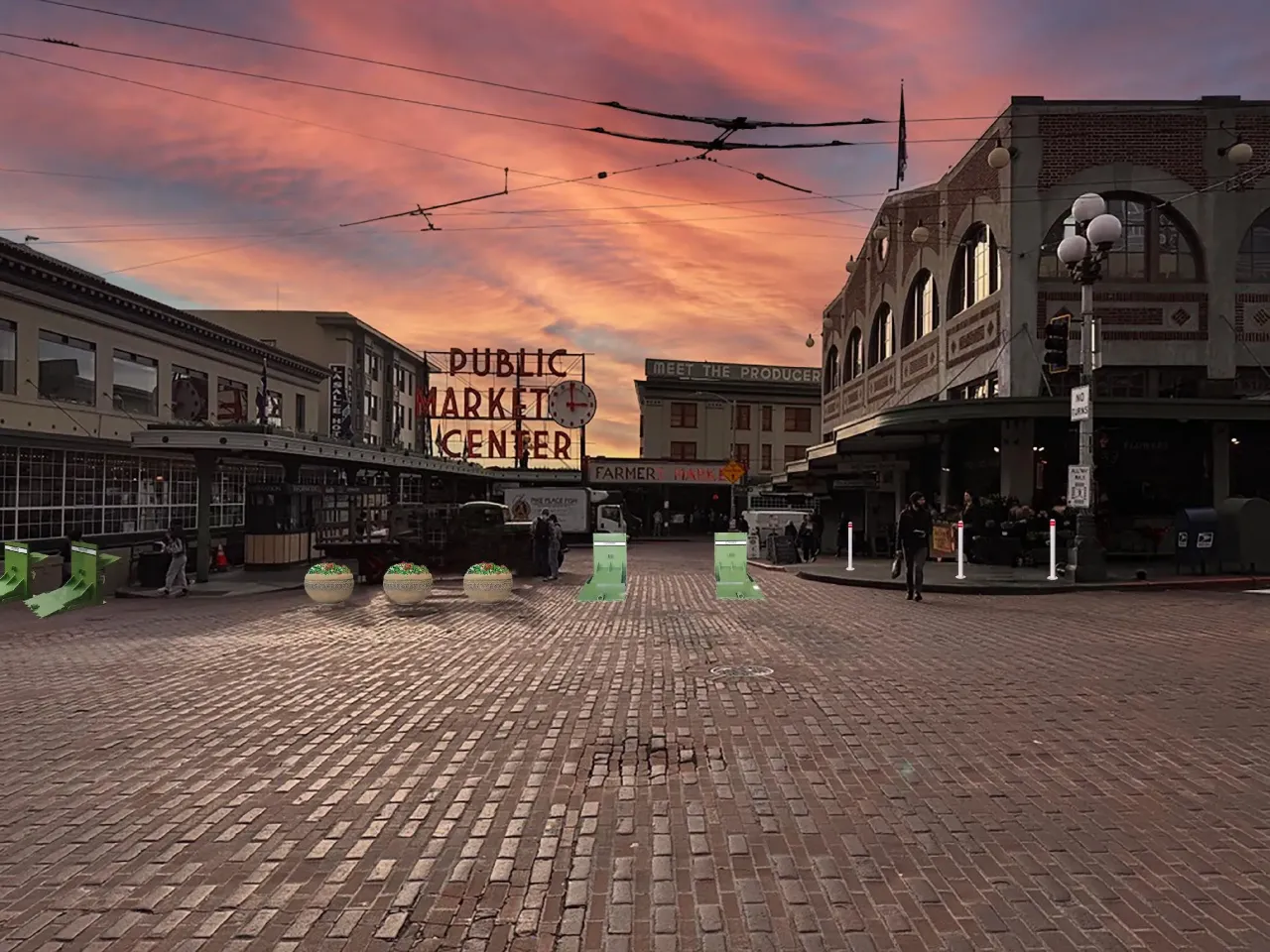
In the coming weeks, the Seattle Department of Transportation (SDOT) will install additional hardening infrastructure at the Market's primary entrances, changes that will allow full closures of Pike Place on FIFA Men's World Cup match days. Those updates include bollards along sidewalk edges that will prevent any drivers from ignoring new movable, crash-rated barricades of the type commonly seen near parade routes.

The Market Historical Commission, a City-established board that oversees the historically-designated preservation district encompassing the entire Market, granted temporary approval for these changes that only extends until this fall.

Pike Place Market Pedestrianization Pilot Boosts Sales and Visits
The interim vehicle barrier plan for Pike Place includes sidewalk-mounted bollards and crash-rated barricades. (SDOT)

Ultimately, the 2025 data backs up what seems crystal clear in practice to many Seattleites: blocking a relatively small number of drivers from being able to careen down the middle of Pike Place at their leisure at any time of day has made one of Seattle's most iconic public spaces much more welcoming.

"I can speak to my experience over the months that this pilot has been going, and say that it's been an immense improvement," Seattle resident Soren Smith told the historical commission in February, as it was considering whether to approve the interim vehicle barriers. "I think that limiting who's allowed would make it easier to get deliveries in and out, [and] make it easier for longtime, valued customers who may, for whatever reason, need to drive to the Market to get in and not have to deal with just the continual line of traffic from one end to the other down the main street that was there for most of the day prior to the pilot."

Pike Place Market Pedestrianization Pilot Boosts Sales and Visits
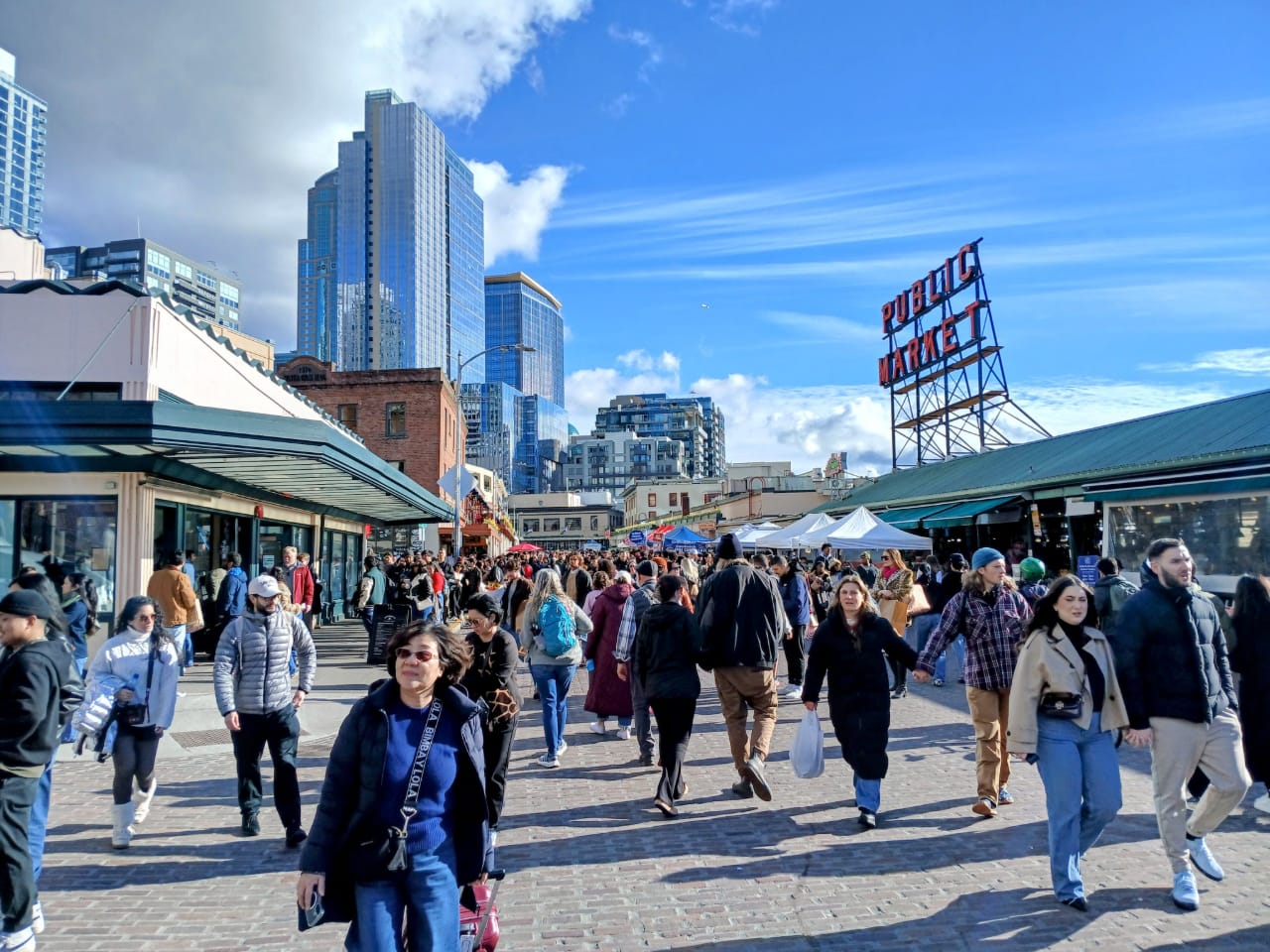
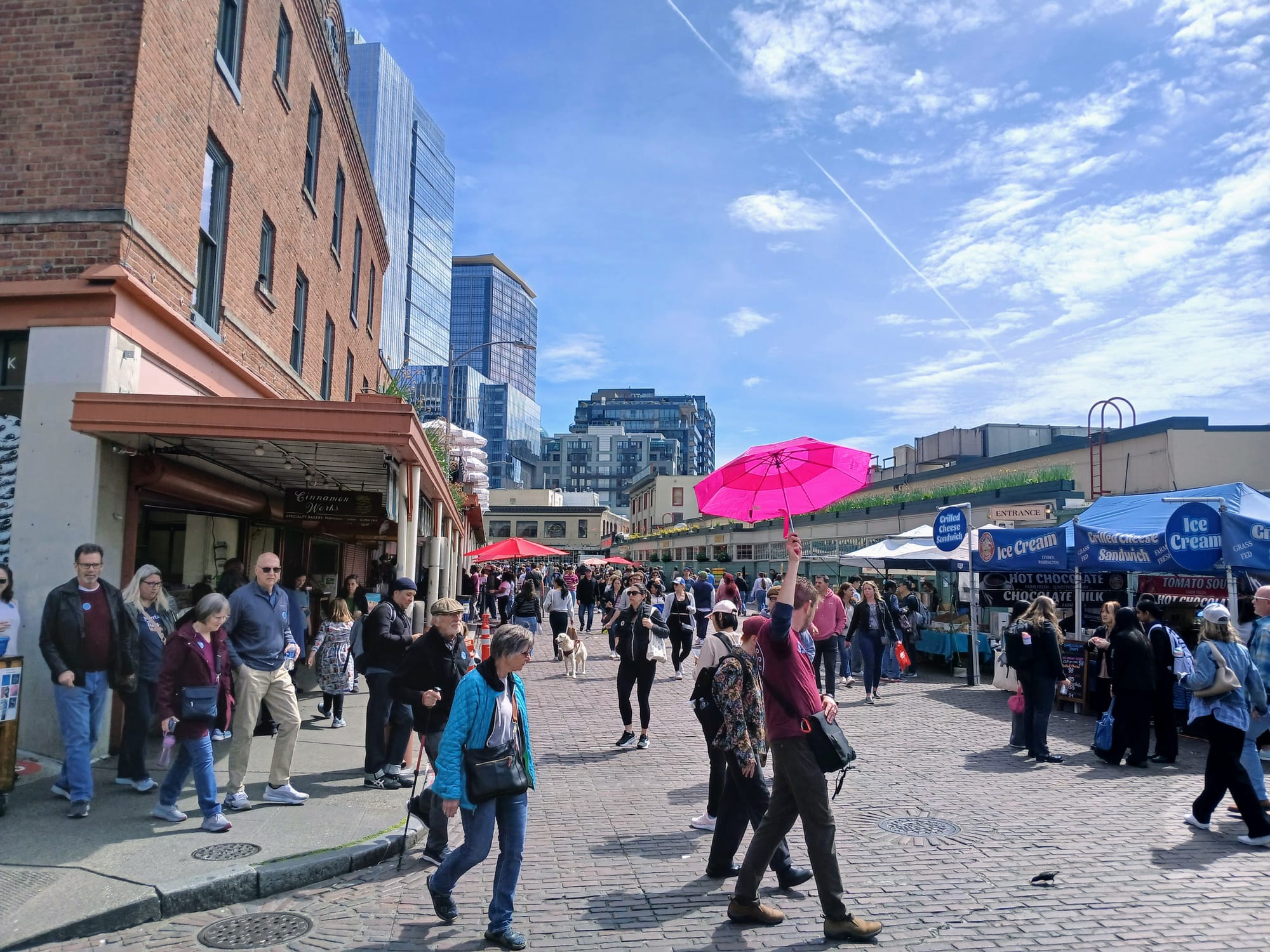
With most vehicles restricted from using Pike Place, the street has been bustling on most days with residents joining tourists in exploring the Market. (Ryan Packer)

Which is not to say that everyone's onboard – far from it. Some of the most skeptical voices when it comes to access changes have been members of Friends of the Market, the advocacy group formed in 1964 to push for preservation of the Market in the face of potential proposals that would have seen it demolished. The group, which is provided two votes on the Market Historical Commission, is just one element of a complex ecosystem of groups that are seen as direct stakeholders when it comes to any potential changes to the Market. (Full disclosure: I served on the Friends of the Market board between 2014 and 2016.)

"While those who want the street closed might wax rhapsodic about the joys of being able to meander down the middle of a car-free street, there are businesses who tell of losing long-time customers to the confusion of encountering STREET CLOSED signs at Market entrances thoughout [sic] much of the day for most of last year," Christine Vaughan, a Friends board member, wrote in the organization's monthly newsletter this month. "Some of these businesses are the legacy grocery sellers: businesses that have been at the Market for 40 or 50 years or even longer, now severely impacted to the point of questioning the viability of continuing their presence in the Market."

Despite the PDA's data showing that produce sales were up 8.1% year-over-year, some produce vendors have indeed voiced concerns about losing their existing customer base.

"Customers come in cars. That's the thing. In the advent of opening up the waterfront, they took away 300 parking spaces and didn't replace them with anything. Now, they're expecting people to come down and there's nowhere to park," Mike Osborn, the owner of Sosio's Produce, told KING 5 last year.

In fact, the Marketfront, the new addition to the Market facing the waterfront that opened in 2017, came with 300 parking stalls that went a long way to replacing the parking stalls that used to sit under the long-demolished Alaskan Way Viaduct. That garage supplements the hundreds of additional parking stalls available around the Market. The number of parking spaces along Pike Place pales in comparison to the number of off-street stalls, but many longtime Market advocates have been pushing for SDOT to increase the amount of time customers can park along the street to accommodate longer shopping trips.

But even surveys of Market business owners had shown that the idea of pedestrianizing the street was broadly popular – before this new data showing the positive impact on sales and visits across the entire district.

The future of the Market is set to come back into the spotlight this fall, after a working group develops recommendations that are set to inform SDOT's request to the historical commission. As hinted by SDOT staff working on the project, that recommendation could include installation of retractable bollards.

In the meantime, the first deployment of the vehicle barricades as part of a full closure of Pike Place is expected on May 9, for Pike Place's 18th Annual Flower Festival.

Market to Test Out Long-Requested Pike Place Car Ban » The Urbanist
# Car access to Pike Place’s main corridor will be restricted to loading vehicles, emergency access, and people accessing ADA parking. The Market is calling the move a “test and learn” opportunity that could open the door to long-term pedestrianization.
Pike Place Market Pedestrianization Pilot Boosts Sales and Visits
Vehicle Barrier Plan for Pike Place Market Comes Into View » The Urbanist
# SDOT’s plan for adding barricades ahead of this summer’s World Cup leans heavily on planters and movable barricades. While the infrastructure could ultimately form a template for longer-term upgrades, these changes look to be quick and dirty and aimed at protecting pedestrians as Seattle opens itself to the world stage.
Pike Place Market Pedestrianization Pilot Boosts Sales and Visits

Read the whole story
Share this story
Delete

The Small Power of Photos, the Large Power of Enforcement

1 Share

In 1961, if you wanted to teach at Olympia High School, you had to show the district exactly what you looked like. Before anyone looked at your degree or your references, they looked at your face. This wasn’t just about record-keeping. This was an era when racial discrimination was common in Olympia but rarely admitted in public. A mandatory headshot was an incredibly effective gatekeeping tool. It allowed the district to maintain a white faculty without ever having to say a word about race out loud.

The State Board Against Discrimination eventually stepped in and told the Olympia School District to stop. The district didn’t just disagree. They took the board to court to fight for their right to require those photos. This legal battle lasted nearly two years. The board argued that a photograph was a graphic specification of an applicant’s race. They said it was just as revealing as requiring applicants to write down their race on the form. Their lawyers pointed out that photographs mainly provide information about physical beauty. Unless beauty was a requirement for teaching, they argued, the policy was a direct violation of state law.

Superintendent Rolland Upton led the defense for the school district. He claimed the photos were just for reference. He said the images helped officials judge professional dignity and personal appearance. The district’s lawyers even argued that because an in-person interview would reveal race anyway, the photo wasn’t the primary tool for discrimination. 

That argument is hard to take seriously. A photo allows a recruiter to toss an application into the trash immediately. It ensures that a minority applicant never even gets the chance to prove themselves in an interview.

Upton’s defense feels hollow when you look at the rest of Olympia’s history. Discrimination wasn’t an accident here. It was built into the system. Ten years before this court case, racially restrictive covenants were still being filed in Thurston County. These were documents that barred non-white people from owning certain homes. They were filed years after the Supreme Court ruled they couldn’t be enforced.

We know these barriers were real because local historians like Thelma Jackson documented them. In her book, Blacks in Thurston County, Washington: A History, she explains how Black residents were treated when they arrived. Real estate agents would simply, without explanation or excuse, refuse to show them homes in specific neighborhoods. It is hard to believe that a school district in that same environment would magically ignore the race of an applicant. Given what we know about Olympia in the 1960s, it’s clear the photos acted as a silent filter.

Research since then backs up what the board suspected back then. We know that visual cues trigger deep biases. When Upton talked about professional dignity, he was likely using a code word. Recruiters often equate professional looks with white beauty standards. This makes people of color seem less capable before they even speak. The board was right to call the photo a graphic specification. A headshot is the strongest signal of race an applicant can provide.

There’s even a technical side to this exclusion. Historically, color film was calibrated using Shirley Cards. These cards featured white models and were used to set the color balance for developing photos. Because the technology was designed for white skin, photos of Black people often lacked detail and texture. Researchers believe this helped promote bias by making minority faces look less human or expressive in print.

This wasn’t just about aesthetics. It was about economics. By using these look policies, the district could cultivate an all-white workforce. This was segregation disguised as a preference for appearance. The consequences were real. Even today, studies on sites like LinkedIn show that Black profiles get fewer responses. By mandating photos in 1961, the Olympia School District put Black educators at an immediate disadvantage. This led to lost careers and long-term wage gaps.

The legal side of the story is just as messy. The local Thurston County judge, Charles T. Wright, originally sided with the school district. He ruled that the board had gone too far. He didn’t think a simple request for a photo proved an intent to discriminate. It was a very narrow way of looking at the law. It ignored how systemic racism actually works. The board appealed to the State Supreme Court. This time, they won. The high court issued a unanimous decision. They ruled that under the specific laws of that time, orders issued by the board against government agencies were not subject to judicial review.

This was a huge win for the commission. It re-established their power to stamp out discriminatory practices in city governments and school districts without getting stuck in long court battles. When the board was first created in 1949, it was weak and underfunded. It didn’t have much power to change things. But by the 1960s, groups like the Congress of Racial Equality were putting on pressure. The state legislature eventually expanded the board’s reach. They started looking at discrimination in housing and public spaces, too.

By 1970, the agency had grown into a much more visible force. It eventually became the Washington State Human Rights Commission. Cases like the one in Olympia fueled this growth. The state had to decide whether to protect the preferences of white officials or the civil rights of its citizens.

Because of the Supreme Court ruling, the ban on photos was upheld. Superintendent Upton had to announce that the district would change its forms. They finally removed the space for the photograph. It was a clear victory. But the people who lost weren’t finished. Some board members suggested they should change the law so they could appeal these decisions in the future.

That’s exactly what happened five years later. In 1971, the legislature rewrote the law. They gave the commission its new name, the Washington State Human Rights Commission. But they also gave other public agencies the right to appeal the board’s decisions. The board had won the battle over the photos, but the legislature had quietly cancelled the war. School boards and city councils found a way to tie the commission’s hands again.

Institutional racism doesn’t need a loud voice. It can work through small rules and administrative details. The Olympia School District didn’t have to say they were discriminating. They just had to say they wanted to see who was applying. But in 1961, seeing was a form of sorting. 

Progress also isn’t a straight line. Every time a barrier is removed, the system can find a quieter way to rebuild it.

This is why the work of people like Thelma Jackson is so important, because it keeps these stories alive. It prevents institutions from rewriting their own history. The 1961 photo case was an early version of the debates we still have today about bias in hiring, banking, policing, and our everyday practices.

This history also shows how far and deep the work to reverse the damage we’ve done in our communities goes. It reminds us that equity isn’t just about changing a form or a policy. It requires a constant, active commitment to tearing down the walls that were built to be invisible.

Read the whole story
Share this story
Delete

DoS That LLM Till It’s 404

1 Share

better than the frat house game UPPER DECKERS, anyway

There’s history to Deckers. Pedigree. Richard Wilkins — better known by the epithet Ricky Royal, the name under which he’s created a bunch of incredible solitaire modes for games that wouldn’t otherwise suit solo play in the slightest — designed a ditty called Renegade back in 2018. Before the plague years. Before the world’s billionaires started cramming robo-slop down our throats and calling it nourishment.

Before, in other words, cyberpunk felt quite so urgent. Back when the genre was a throwback to ’80s techno acceleration and not ’20s techno throttling.

Deckers is Renegade. That’s the short version. The slightly longer version is that Deckers is Renegade, but decoupled from the vulture who acquired it along with the rest of the Victory Point Games catalog, and with the expansion packs folded in, some additional clarity and development, and a new coat of paint. It won’t persuade anybody who didn’t get along with the original, but it’s just as fresh as ever. And as infuriating.

This is how he appears in a corpo's office. With a hot-pink katana.

Man of mystery. And mood-setting backlighting.

Like all cyberpunk games, Deckers is about jacking into an encrypted network that’s inexplicably neon. There’s some technobabble about a supercomputer run amok, how society’s last chance hinges on a team of keyboard jockeys sticking it to the man by typing stuff on the internet. But we all know why we’re really here. To kill Grok. To murder OpenAI. To finally figure out how to remove the smart features from Windows 11. If we play our cards right, to fry the dopamine-jack in Sam Altman’s head.

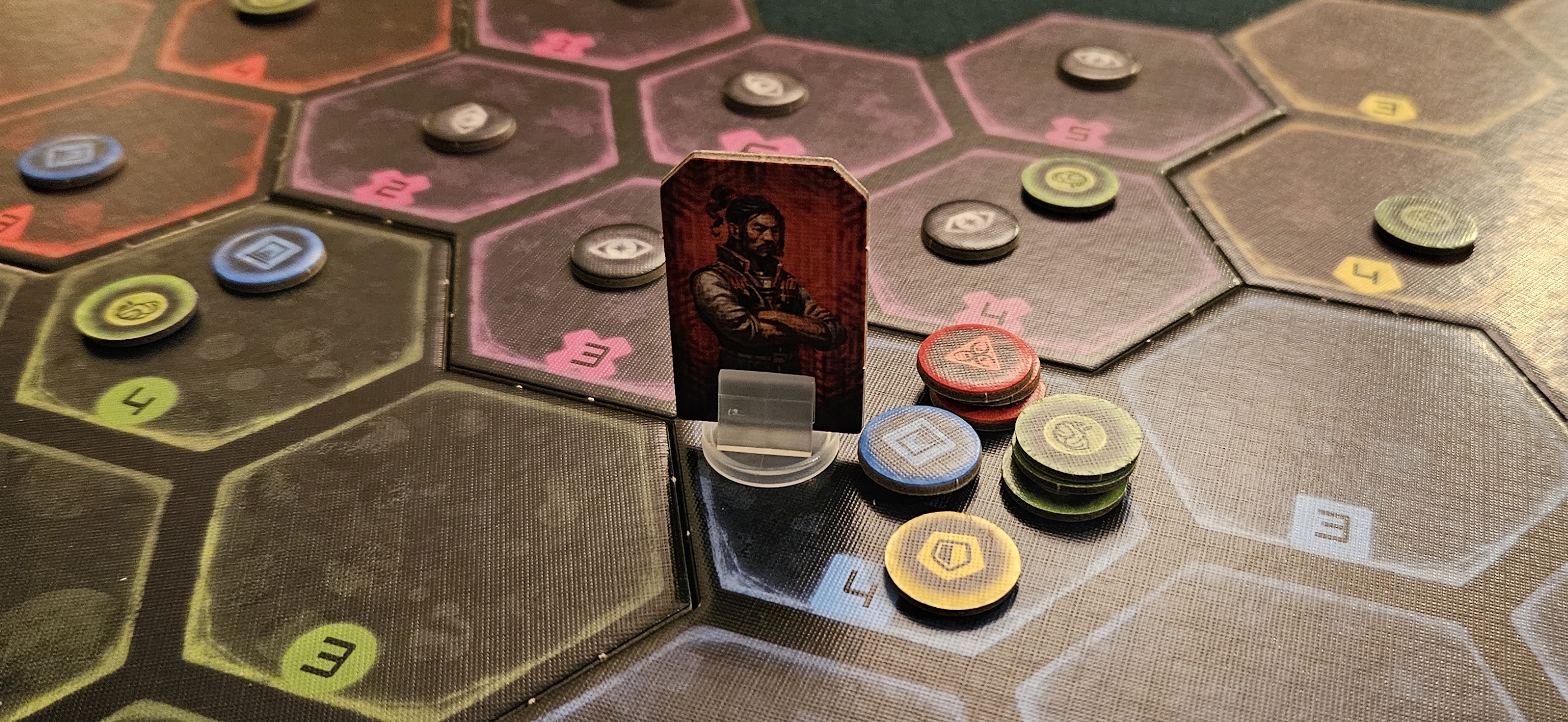
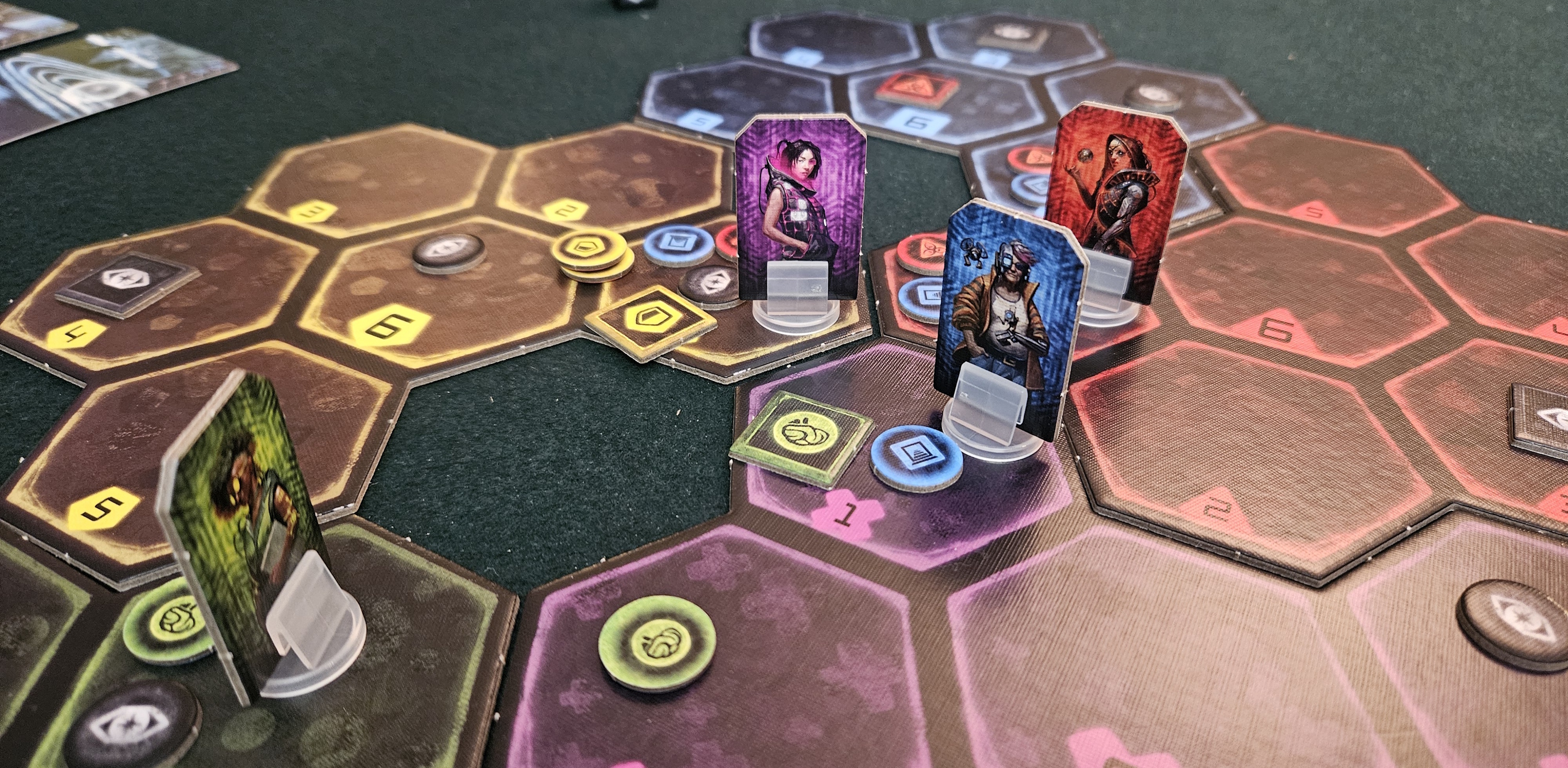
The game’s first impressions are… let’s call them “mixed.” The network is a blob of color-coded hex grids. The game’s terminology is heavy with “SMCs” and “sparks” and “ghosts.” There are heaps of actions, and modifiers to those actions depending on the color of the icons you trigger them with.

And then there’s the mission structure. Scenarios in Deckers aren’t scenarios so much as they are accumulations of objectives. First you pick which SMC you’ll be decking. (See? I told you there would be terminology.) Then you populate that SMC with objective cards. These range from the simple to the confounding. Sometimes they’re clear enough, like generating a network keycode by installing four different programs on your decker’s entry point. Other times, they tip over the edge into a nihilism of iconography. A couple plays ago, we flipped the final objective and discovered we were meant to create a “mirror map.” Every server on the table, all five of them, were to have an identical configuration of programs, both friendly and rival, with at least one program of the four primary types. Such a goal might be easy or might be hard, depending on how well the mission had been going up to that point and whether the current SMC would add and/or shift lots of nasty counterintrusion programs, but it will never seem like anything other than the sort of busywork a teacher hands out to their fifth-grade students when there’s only forty-five minutes left in the day and she’s come down with another migraine, dammit.

Shades of that silly Microsoft CEO who's always calling LLMs "cognitive enhancers" like the world's yuckiest irony.

Bootin’ up my Win11 PC, callin’ it NOOTROPIC BLOOM.

Now, you might be thinking that I’m not putting Deckers on the strongest footing. You’d be right. But I want to emphasize this point. Deckers is not for the faint of heart. Despite resembling Pandemic in a few superficial ways, it’s crowded with icons and ideas and actions and colors and special powers and objectives that require a few re-reads before they make a lick of sense.

But it’s also modular. In the case of our misbegotten mirror map, we goggled at the objective’s preposterousness for a bit, then drew a much more reasonable replacement. There are loads of customization options. And as much as I’m can grow irritable at a game asking me to set its difficulty level rather than providing me with an intended experience, I can’t help but appreciate the way missions unspool on their own, coughing up new problems according to some imperceptible aleatory logic.

More than that, the game’s thicket of information is a not-insignificant part of its appeal. To play Deckers is to step into the boots of a troubleshooter. Where most cooperative and solitaire games present a puzzle, Deckers presents a problem. Often that problem is multilayered, difficult to discern, and seems impossible at first glance.

The other thing Deckers provides, though, is a toolkit. More than a toolkit. An entire tool shed, full of power appliances and extension cords and, oh, here’s a weed whacker and some fertilizer. Maybe a pool pump just in case.

At its most basic level, Deckers is a deck-building game, although like everything else this is an inadequate description. It’s not so much about deck-building as it is about deck-renovating. You have fifteen cards when the game opens. You’ll have fifteen when it ends. In the middle, you can purchase cards that swap into the place of previous cards. This keeps the game pacey, not to mention erases the usual bloat that accompanies deck-building.

*glances at Wee Aquinas on my site header* oh no. oh no oh no.

You do you, but my decker avatar wouldn’t be a middle-aged shlub.

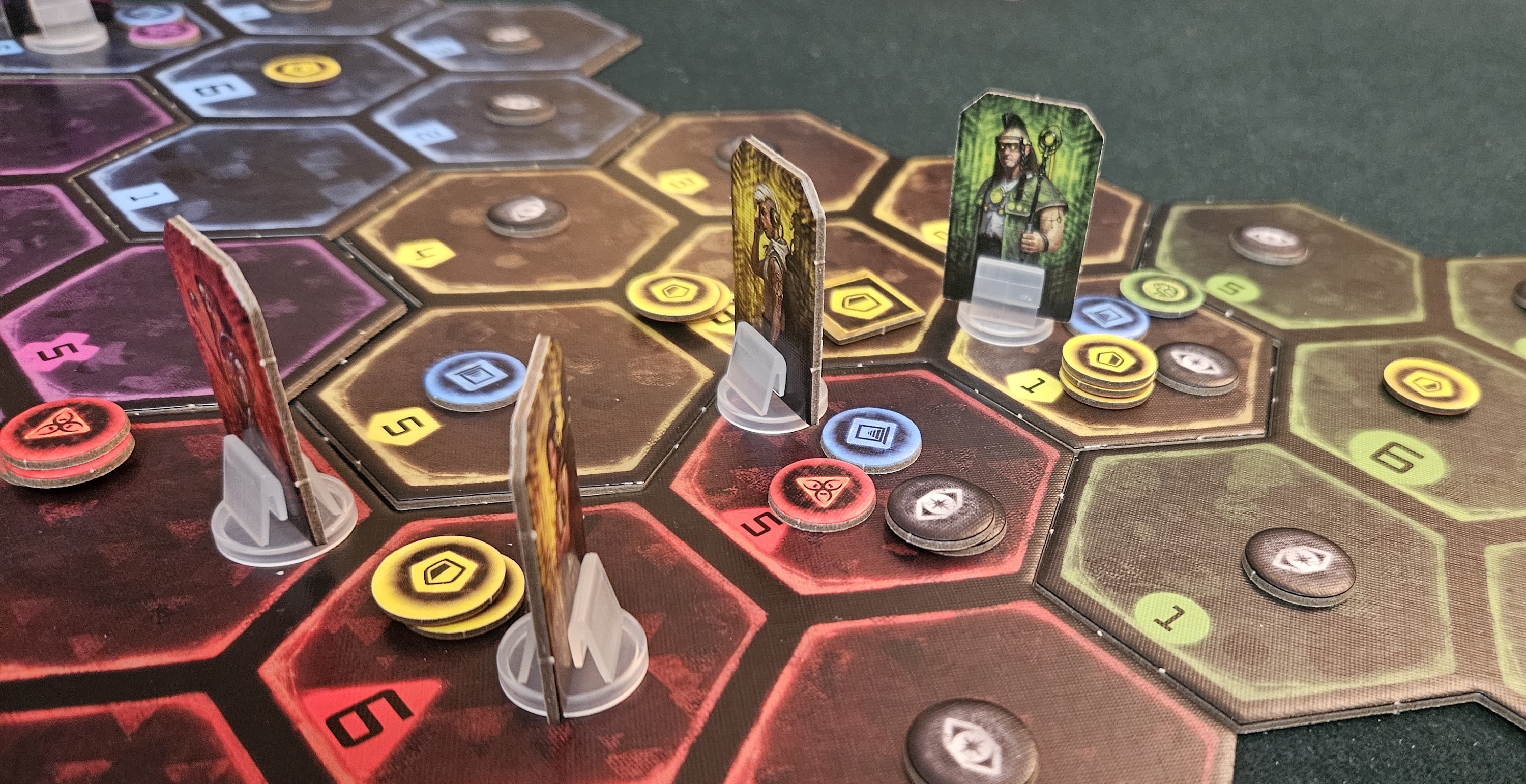
What’s more, those cards put in the work. Before long, the network will be speckled with color. Programs, the little round tokens, each have their own functions, such as attacking enemy sparks (red and yellow), permitting easier movement through cyberspace (blue), or rearranging other bits of data (green). Programs eventually transform into installations, the larger boxy tokens, which are even better at attacking, permitting movement, or rearranging data. Sometimes they’re so much better that you can teleport around the network at will or project a ghost image of your character to another position entirely.

That network, meanwhile, becomes textured not because of any inherent topography, but thanks to the addition and movement of the game’s various threats and the consequences of your activities. Perhaps an information superhighway of blue and green tokens will take shape, allowing your deckers to race along it with impunity, shuttling programs where they need to go and dousing fires wherever they appear. Or maybe an incursion by the SMC will transform a corner of the network into a minefield of enemy sparks and guardians, necessitating a gradual campaign of reclamation lest they blossom, Pandemic-style, into an early loss.

The same goes for the game’s underlying problems and their various solutions. It’s rare that one of these problems will present a straight line from A to Z. Instead, the game meanders. In one mission, when a corporate decker appeared to ice our asses, we were prohibited from entering his space at all. How then, could we beat him? We eventually set up a green installation, ghosted into his space, pushed viruses into position from neighboring hexes, and then engaged in an epic roll-off. Everyone at the table was invested. Attention-wise, sure, but also because they had been churning their decks to find the cards that could massage the outcome of our climactic roll. The solution was messy, inelegant, and harried by ancillary problems. It took coordination, not to mention required everyone to work to mitigate the game’s chancier elements.

In the process, it became closer to real-world problems and their real-world solutions than most board games manage. We weren’t solving some graceful puzzle. We were patching over a memory leak and hoping it wouldn’t crash the whole network. Are those things? I have no idea. But that’s what Deckers feels like.

Hey. I never realized it until this moment, but “Deckers” is a pun. Decking-in. Deck-building. Heh.

"Didja hear? Sheepang Deedrip got Deep Sixed by Boop Scoop for working the Muzzlers. You pang?"

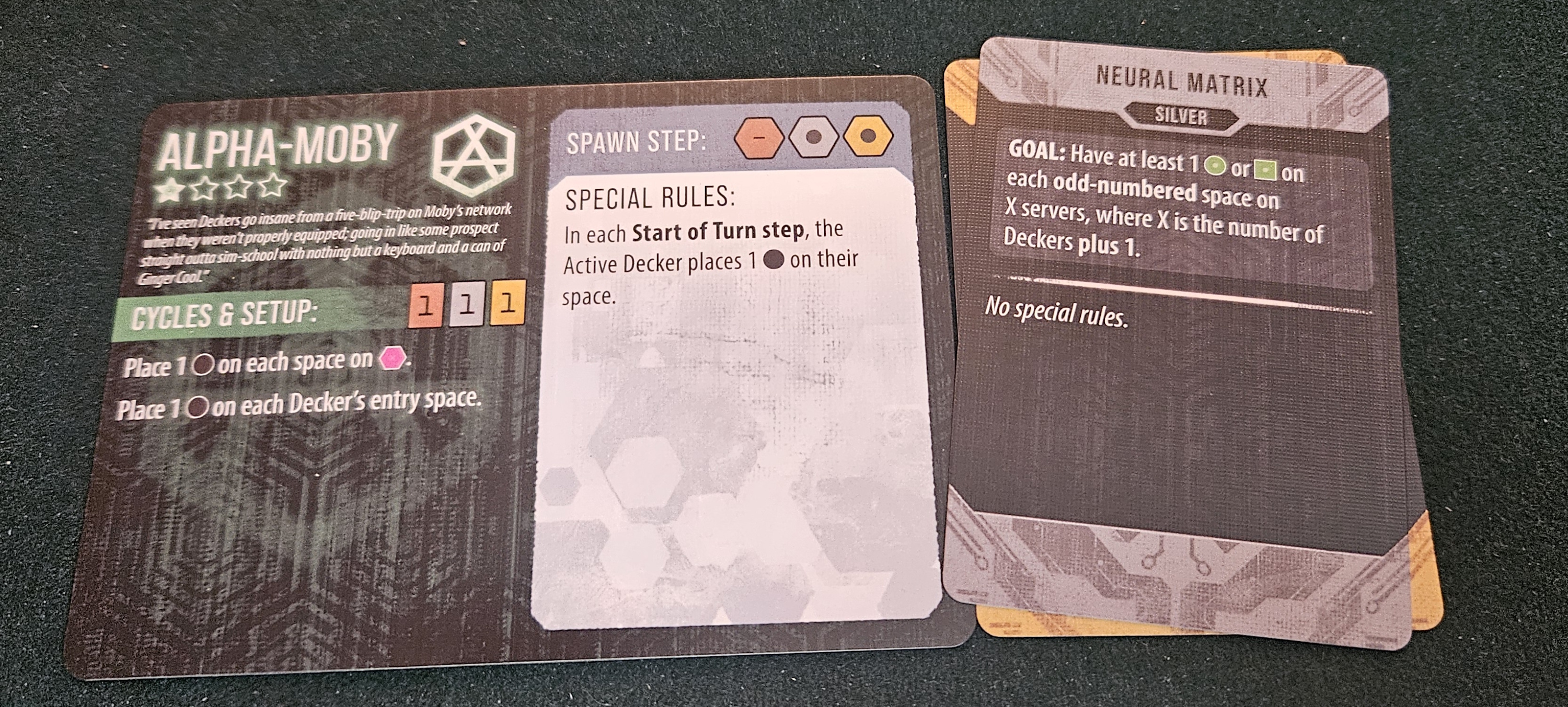
“I’ve seen deckers go insane from a five-blip-trip on Moby’s network…”

To be clear, Deckers never fully escapes its issues. Even at its best, it can grow fiddly with all those tokens, and there’s always the chance that a new objective will prove just an action or two shy of being solvable. Even the deck-building feels flashy but isn’t wholly interesting, more about fine-tuning cards into better versions of themselves than altering a deck into something new.

But maybe that’s how it ought to be. Even when it was called Renegade, Deckers was something of a throwback. I’m old enough to remember when the prevailing wisdom for cooperative games was that they should only be winnable one in three plays. Nowadays, most board games are tuned to provide a solid first session, because in all likelihood that’s all they’re ever going to get. The unfortunate trickle-down is that most cooperative games are easy, which is to say dull, which is to say they’re boring.

There are moments when Deckers is boring, but it’s a very different sort of boring. It’s not the boredom of tedium; it’s the boredom that arises when a problem is inscrutable and so our mammalian instincts tell us to hibernate rather than facing the issue with our whole chest. It’s like hearing that human civilization is killing the oceans or running out of freshwater. Why worry about that stuff? Easier to take a nap.

In a way, that’s what makes Deckers worthwhile. Because these folks could have taken a nap, too. Just look at them. Some of the game’s characters are classic cyberpunk. Leiko Mori is a chick in a leather vest illuminated by purple LEDs. Oshin Noro is more or less a samurai. Two of them are twins with USB-Zs plugged into their ears. But there’s an appropriate shlubbiness to the rest of the cast. Tilda Sweet cut my hair once. Monty Quantum is the guy who mains a druid. Hettie Magnetic is prediabetic. They’re a little more into body modification than the average Joe, but they’re surprisingly ordinary. It’s just that they’re willing to put their principles into practice when it comes to AI slop. Their solutions are messy workarounds. Sometimes they fall apart. And sometimes I cheat by drawing a different objective card because the last one read like a word problem. Hey, that’s why I play board games. Because they’re ours.

ruh roh we overheated the coolant tower of the local server farm that ran on baby calories oh nooooes

Check out these cool kids and their cool hobbies.

That’s all to say that Deckers is something special. Not only in spite of its problems, but because of them. In credit to them. This is a compact, dense game, produced and presented on a budget, and I like it all the better for that too. It’s a big rowdy mess that sometimes falls apart at the edges, and in fact is never better than when you’re asked to tug at its fraying strands. Down with the slop. Up with the folk who decided it was better to keep their avatar paunchy. Welcome to the revolution, pal.


A complimentary copy of Deckers was provided by the publisher.

(If what I’m doing at Space-Biff! is valuable to you in some way, please consider dropping by my Patreon campaign or Ko-fi. Right now, supporters can read about which films I watched in 2025, including some brief thoughts on each. That’s 44 movies! That’s a lot, unless you see, like, 45 or more movies in a year!)


Read the whole story
Share this story
Delete
Next Page of Stories